


The Meeting of Two Geniuses
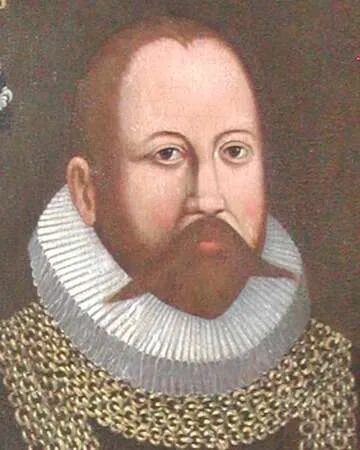
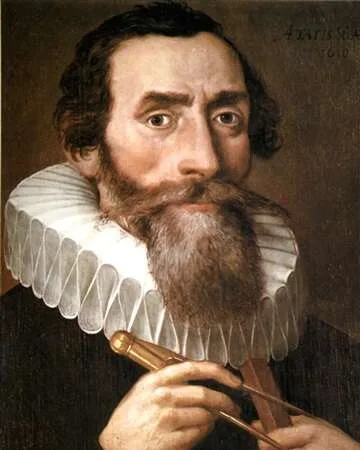
In the year 1600, a defining moment in the history of astronomy occurred when Tycho Brahe, a prominent Danish astronomer, met the young and ambitious Johannes Kepler near Prague. This encounter not only marked a significant collaboration but also set the foundation for the future of celestial mechanics. Brahe, known for his precise astronomical observations, had built a specialized observatory where he meticulously recorded the positions of over 777 stars without the aid of a telescope, an invention that would not be realized until later in the century.
Tycho Brahe: The Master Observer
Tycho Brahe (1546–1601) was known for his unique approach to astronomy. His detailed work laid the groundwork for modern astronomy. He established a hybrid model of the universe where the Earth was at the center, which deviated from both the fully geocentric model and the heliocentric model suggested by Copernicus. Brahe's commitment to precise data collection allowed him to challenge existing astronomical theories of the time.
Johannes Kepler: The Visionary
Johannes Kepler (1571–1630), a mathematician and astronomer, emerged from humble beginnings. His keen intellect and fascination with the cosmos led him to study under Brahe, where he would ultimately develop his laws of planetary motion. These laws challenged the rigid views of the time and paved the way for a modern understanding of orbiting bodies.
Beginnings of a Revolutionary Theory
The collaboration between Brahe and Kepler was instrumental in shaping early modern astronomy. Brahe’s observational data and Kepler’s mathematical prowess combined to enhance the study of celestial bodies significantly.
Kepler’s Laws of Planetary Motion
After Brahe's death, Kepler took the reins of his comprehensive observations and formulated his three laws: the Law of Ellipses, the Law of Equal Areas, and the Law of Harmonies. These laws not only described the motion of planets in detail but also propelled forward the shift from a geocentric to a heliocentric understanding of the universe.
The Impact of Their Meeting
The meeting of Tycho Brahe and Johannes Kepler was more than a casual encounter; it was a meeting of minds that influenced the trajectory of astronomy. Their collaboration helped transition astronomers away from relying solely on philosophical reasoning to employing rigorous observation and mathematical calculations.
Fun Fact
The Lasting Legacy of Brahe and Kepler
Interestingly, although both men had strong personalities that sometimes clashed, their respective contributions to astronomy laid the groundwork for figures like Isaac Newton, who would later build upon their findings to develop the law of universal gravitation.
Additional Resources
Recommended Reading on Brahe and Kepler
If you wish to delve deeper into the lives and contributions of these two astronomers, consider reading "Kepler's Witch: An Astronomer's Lament" by James A. Connor or "Tycho Brahe: His Life and Work" by David J. Rothery. These works offer insightful perspectives into their lives, challenges, and achievements that transformed astronomy.










 Continue with Google