


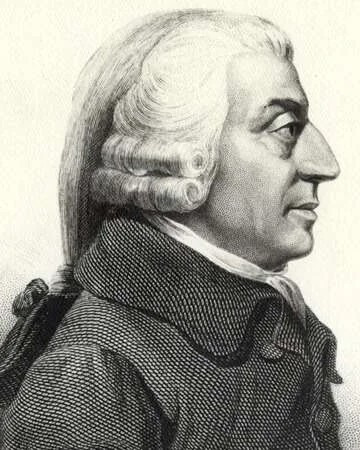
Adam Smith's Birth and Early Life
On a noteworthy day in history, the brilliant mind of Adam Smith was brought into the world in Kircadlly, Fife, Scotland, in 1723. Known as the father of modern economics, his contributions have shaped the field profoundly. His groundbreaking work, The Wealth of Nations, published in 1776, laid the foundations for free market economics. However, Smith's intellectual journey began much earlier.
Understanding Adam Smith's Background
Born on June 5, 1723, Adam Smith's early years were marked by a keen curiosity about the world around him. He attended the University of Glasgow at a young age, where he immersed himself in the study of philosophy and economics. His upbringing in the Scottish enlightenment, a period rich in intellectual thought, greatly influenced his later works.
The Significance of His Baptism
On this momentous day, Adam Smith was baptized, often considered a significant event in a person's early life. This ceremony was not just a religious tradition; it marked the beginning of a notable career that would impact generations to come. By understanding the values and ideas he absorbed during his formative years, we can better appreciate the principles he later articulated in his writings.
Adam Smith’s Contributions to Economics
Adam Smith's works extend beyond mere economics; they encapsulate moral philosophy assessing the nature of human interaction and society's structure. His most renowned text, The Wealth of Nations, is a comprehensive exploration of how markets function and the role of self-interest in promoting economic growth.
How Adam Smith Shaped Economic Thought
With the publication of The Wealth of Nations, Adam Smith introduced revolutionary concepts like the 'invisible hand,' describing how individuals pursuing their interests can benefit society at large. His ideas challenged prevailing economic theories and provided a new framework for understanding market dynamics.
Impact on Modern Economic Policies
To this day, Smith's principles remain pivotal in modern economic policies worldwide. His advocacy for limited government intervention and the importance of free markets has influenced countless economists and policymakers. The relevance of his ideas is evident in today’s discussions around capitalism and regulation.
Fun Fact about Adam Smith
Adam Smith's Unusual Career Path
Did you know that before his rise as an esteemed economist, Adam Smith was a professor of moral philosophy? This unique combination of psychology and economics allows for a deeper understanding of human behavior and economic principles.
Additional Resources
Recommended Reading on Adam Smith
For those looking to delve deeper into the life and ideas of Adam Smith, consider reading The Wealth of Nations and The Theory of Moral Sentiments. These works provide an illuminating glimpse into the mind of a true visionary.













 Continue with Google