


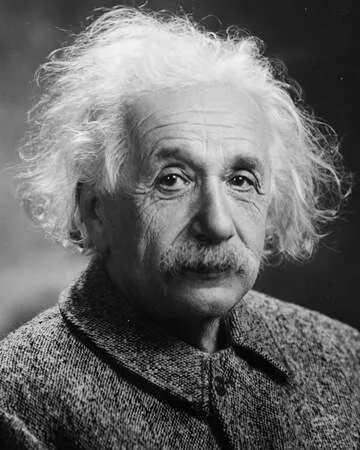
The Genius of Ulm: Albert Einstein's Early Life
Born on March 14, 1879, in Ulm, in the German Empire, Albert Einstein grew to become one of the most influential physicists of all time. His legacy is marked by groundbreaking theories that reshaped our understanding of the universe. His early life was marked by a curiosity about the natural world, leading him to ask profound questions that would later inspire his extraordinary scientific career.
Albert Einstein's Formative Years
Einstein’s family moved to Munich shortly after his birth, where he began his education. From a young age, he showed an extraordinary aptitude for mathematics and physics, often solving complex problems long before his peers. His love for learning was evident but so was his disinterest in the rigid education system, which he found stifling. This early educational journey shaped his independent thought process that would later define his scientific approach.
The Birth of Relativity
In 1905, while working at a patent office in Bern, Switzerland, Einstein published four groundbreaking papers. One of them introduced the world to his special theory of relativity, summarizing his revolutionary idea in the iconic equation E = mc². This equation expressed the equivalence of mass and energy, fundamentally changing the field of physics. Throughout his career, Einstein continued to refine his ideas, eventually formulating the general theory of relativity, which provided a new understanding of gravity.
A Legacy in Physics: The Nobelist
In 1921, Einstein was awarded the Nobel Prize for Physics for his explanation of the photoelectric effect, another cornerstone of quantum theory. This award helped cement his status as a leading scientist, but it was his theories surrounding relativity that captured the public’s imagination and have made him a cultural icon.
Albert Einstein's Impact on Science
Einstein's work transcended the field of theoretical physics. His theories led to advancements in technology, including modern GPS systems that rely on principles of relativity. His insights into the atomic nature of energy and matter also laid the groundwork for future work in quantum mechanics, influencing countless scientists after him.
Remembering Einstein’s Vision
Beyond his scientific contributions, Einstein was a passionate advocate for peace and social justice, speaking out against war and racism. His public stance on these issues elevated the role of scientists in societal discourse, demonstrating how intellectuals could influence the world profoundly.
Fun Fact
Einstein's Passion for Music
Aside from physics, Einstein had a great love for music, particularly for playing the violin. He often remarked that if he weren’t a physicist, he would have loved to be a musician, showcasing his multifaceted approach to life and creativity.
Additional Resources
Recommended Reading on Albert Einstein
For those interested in learning more about Albert Einstein, consider reading "Einstein: His Life and Universe" by Walter Isaacson, which explores the intricacies of his life and theories. Another captivating read is "The World As I See It", wherein Einstein shares his perspectives on ethics, politics, and life.










 Continue with Google