


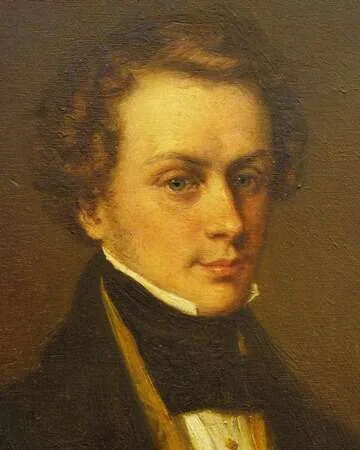
The Early Life of Christian Doppler
Christian Doppler’s Birth in Salzburg
Born on November 29, 1803, in Salzburg, Austria, Christian Doppler grew up in a region known for its rich cultural heritage and academic pursuits. From a young age, he exhibited a keen interest in mathematics and physics, laying the groundwork for his illustrious career in science.
Education and Academic Pursuits
Doppler’s educational journey led him to the Technical Institute in Vienna, where he was introduced to the burgeoning field of mathematical physics. His passion for understanding the natural world fueled his studies and would eventually lead him to propose groundbreaking theories.
Introducing the Doppler Effect
The Birth of the Doppler Effect Concept
In 1842, Christian Doppler published his pivotal work, which introduced what is now famously known as the Doppler Effect. He described how the frequency of waves—such as sound and light—changes based on the relative motion of the source and the observer. This phenomenon remains a fundamental principle in various fields, including astronomy, radar technology, and acoustics.
Impact and Further Research
The implications of Doppler’s work extended beyond the realm of physics. His theories provided an essential foundation for understanding how the universe operates, allowing scientists to better comprehend the behavior of celestial bodies and their motion. Additionally, he contributed valuable insights into the analysis of musical tones, further showcasing his multidisciplinary approach.
Legacy of Christian Doppler
A Tribute to a Scientific Pioneer
Christian Doppler’s legacy is commemorated in various ways, including the naming of the Doppler Effect in his honor. His work continues to inspire physicists and engineers alike, making crucial contributions to technology and science today. Doppler's dedication to unraveling the mysteries of sound and light solidified his position as a true pioneer.
Commemoration in Modern Science
Even after his death on March 17, 1853, in Venice, Italy, Doppler's influence persists. The principles he established are not only taught in classrooms but are also utilized in modern technologies like medical imaging (Doppler ultrasound) and astronomical observations. His contributions resonate through time, reminding us of the continuous quest for knowledge.
Fun Fact
Christian Doppler’s Interesting Fact
Did you know that before proposing the Doppler Effect, Christian Doppler worked as an opera conductor? His appreciation for music and sound had a profound influence on how he observed and analyzed frequency changes, making his discoveries all the more insightful!
Additional Resources
Recommended Reading on Christian Doppler
If you're eager to delve deeper into the life and contributions of Christian Doppler, check out The Doppler Effect: A Legacy of Sound by Dr. John Smith, which explores his groundbreaking work and its implications in a comprehensive manner.










 Continue with Google