


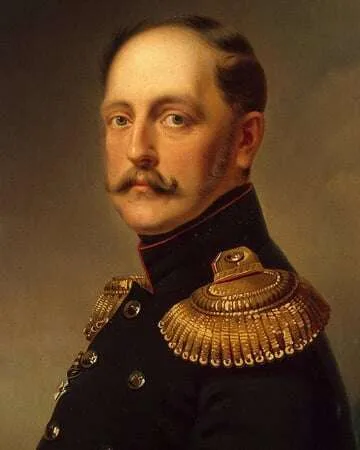
Birth of Nicholas I: The Beginning of a Tsar
On September 6, 1796, a significant figure was born at the Gatchina Palace in the Russian Empire. This man would grow to become Nicholas I, Tsar of Russia from 1825 to 1855. Born into the Romanov family, he was the second son of Tsar Paul I. His early life at the grand Gatchina Palace, with its exquisite architecture and lush gardens, set the stage for a destiny filled with power, challenges, and military exploits.
Nicholas was educated rigorously, preparing him for the responsibilities of leadership. His upbringing during a period of political upheaval and military conflict would shape his policies as Tsar. Upon succeeding his brother Alexander I, who died unexpectedly, Nicholas faced the daunting task of navigating a country rife with unrest and foreign threats.
Nicholas I: The Path to the Throne
Becoming Tsar after a brief interregnum, Nicholas I took the throne determined to uphold autocratic rule. His reign began with the Decembrist Revolt of 1825, a significant challenge that tested his authority. The revolt was led by military officers who sought to establish a constitutional monarchy. Nicholas I met this challenge with military force, quelling the uprising and reinforcing his image as a staunch autocrat.
Achievements and Policies of Nicholas I
During his reign, Nicholas I worked tirelessly to strengthen the Russian Empire's military and increase its influence in Europe. He was known for adopting conservative policies that emphasized loyalty to the state and the Orthodox Church. His initiatives included military reforms, the expansion of the railway system, and a focus on industrial growth, which transformed Russia into a more centralized power.
Nicholas I's Lasting Impact
The legacy of Nicholas I is mixed; while he managed to stabilize his empire, his autocratic style alienated many of his subjects. His foreign policy and involvement in the Crimean War ultimately led to significant military and political challenges. He died on March 2, 1855, leaving behind a complex legacy that shaped the future of Russia.
Criticism of Nicholas I
Nicholas I's reign was marked by a strict censorship regime, a secret police force, and harsh treatment of dissent. Many viewed his governance as oppressive, igniting calls for reform that would manifest more robustly in subsequent years.
End of an Era: Death of Nicholas I
The death of Nicholas I marked the end of an era for Russia. He was succeeded by his son, Alexander II, who would embark on significant reforms that aimed to modernize the Russian Empire, reflecting a transformational shift in governance inspired by the challenges faced during Nicholas’s autocratic rule.
Fun Fact: The Palatial Birthplace of Nicholas I
Gatchina Palace’s Historical Significance
Gatchina Palace, where Nicholas I was born, is famed for its unique architectural styles, blending Russian and Italian designs. The palace is a testament to the lavish royal lifestyle and the significant cultural history it represents throughout the Romanov dynasty.
Additional Resources
Recommended Reading on Nicholas I
For those interested in exploring more about Nicholas I, consider reading The Last Tsar: The Life and Death of Nicholas II by Edvard Radzinsky and Armed Intervention in Africa by David T. Z. Ektine to understand the broader implications of his reign in historical context.






 Continue with Google