


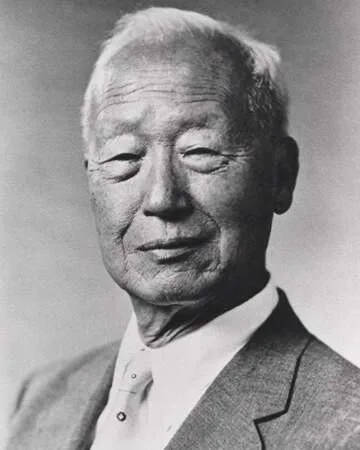
The Legacy of Syngman Rhee
Syngman Rhee, born in Haeju, North Korea in 1875, holds a prominent place in South Korean history as the country's first president. Rhee's presidency spanned from 1948 to 1960, a significant period during which he laid the groundwork for South Korea's post-war recovery and political establishment. His leadership was marked by both significant achievements and notable controversies, charting a complex path for the nascent democratic state.
Early Life and Political Awakening
Rhee's formative years were influenced by the colonial pressures faced by Korea in the early 20th century. Graduating from Princeton University, he became an advocate for Korean independence and an active participant in the Korean nationalist movement. His return to Korea positioned him at the forefront of the struggle against Japanese rule, ultimately molding his political ideology and aspirations.
Presidency and Political Struggles
After Korea was liberated post World War II, Rhee was thrust into the political arena. He was elected the first president of South Korea in 1948. His administration focused on **nation-building efforts**, combating the growing threats from North Korea, and forging strong alliances with the United States. However, his governance was not without challenges; accusations of authoritarianism and electoral fraud marred his presidency, leading to widespread protests.
The Impact of Rhee's Leadership
Throughout his presidency, Rhee sought to stabilize the South Korean economy and military amidst the Korean War (1950-53). His leadership style often leaned towards autocracy, yet he was also instrumental in establishing South Korea's independence as a sovereign state.
Rhee's Economic Policies
Rhee implemented various economic policies aimed at recovery and modernization. His government focused on agrarian reform and inviting foreign investment, which were pivotal to South Korea's economic transformation in the subsequent decades.
The Fall of Rhee's Presidency
Despite early accomplishments, Rhee’s demand for unchecked political power led to his eventual downfall. The protests during the April 19 Revolution in 1960, sparked by students advocating for democratic governance, culminated in his resignation. His exile in Hawaii marked the end of an era but left lasting impacts on South Korean political discourse.
Fun Fact about Syngman Rhee
Rhee's Diplomatic Ties
Interestingly, Rhee was a strong proponent of establishing close ties with the United States, a relationship that significantly shaped the course of South Korean politics and economics during the Cold War.
Additional Resources
Recommended Reading on Syngman Rhee
For those interested in exploring more about Syngman Rhee and his contributions, consider reading “The Korean War: A History” by Bruce Cumings, which provides insightful context to the significant events during his presidency.













 Continue with Google