


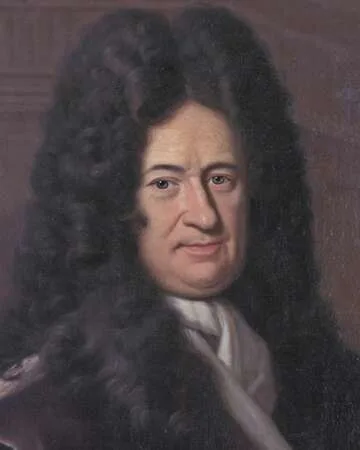
The Legacy of Gottfried Wilhelm Leibniz
Gottfried Wilhelm Leibniz, born on July 1, 1646, in Leipzig, significant historical figure, has had an enduring impact on mathematics and philosophy. As a German mathematician and philosopher, Leibniz is best known for independently developing calculus around the same time as Sir Isaac Newton. His contributions established a foundation for modern mathematics, making him one of the key figures during the Enlightenment period.
Leibniz’s approach to calculus, utilizing his notation for differentiation and integration, differed markedly from Newton’s but complemented the existing mathematical practices of the time. His notation, including the integral sign (∫) and the d for differentials, is still in use today, underscoring the lasting brevity of his work.
Leibniz’s Contributions to Calculus
Gottfried Wilhelm Leibniz made significant strides in the formulation of calculus, wherein he focused on the study of change and motion. His publication, "Nova Methodus pro Maximis et Minimis," introduced his calculus notation, which facilitated mathematical calculations and theories related to areas and rates of change.
Life and Work
Beyond calculus, Leibniz was involved in many areas of study, including logic, metaphysics, and technology. His philosophical inquiries led him to explore topics of existence and reality, contributing to the philosophical dialogues of his time.
Impact of Leibniz’s Works
Despite facing contention from contemporary figures in mathematics, Leibniz’s legacy endures through his foundational contributions to various fields. His ideas in philosophy also paved the way for future philosophical thought, including the principles of optimism and metaphysics.
The Philosophy of Optimism
Leibniz is often celebrated for his optimistic outlook, encapsulated in the phrase, "This is the best of all possible worlds." His philosophical works explored the relationship between free will and predestination, significantly influencing later thinkers and schools of thought.
Technological Innovations
In addition to his philosophical and mathematical prowess, Leibniz was an inventor. He created the first practical calculating machine, aiming to advance mathematical operations and make tasks easier for other mathematicians and the general public.
Fun Fact
Leibniz’s Interesting Fact
Gottfried Wilhelm Leibniz had a passion for the arts and languages, speaking multiple languages fluently, which contributed to his eloquent writings and diverse philosophical stance.
Additional Resources
Recommended Reading on Gottfried Wilhelm Leibniz
For those looking to explore more about Leibniz, consider reading "The Leibniz-Clarke Correspondence" for insights into his philosophical exchanges, or "Gottfried Wilhelm Leibniz: Philosophical Essays" to delve deeper into his thoughts and works.








 Continue with Google