


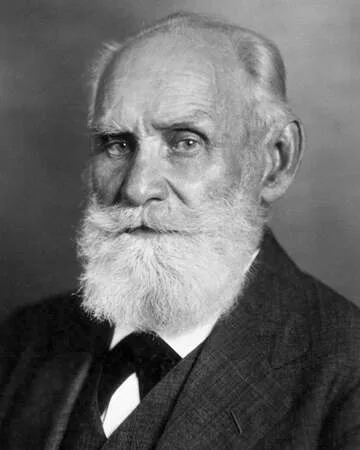
The Life and Contributions of Ivan Pavlov
Born on **September 14, 1849**, in **Ryazan, Russia**, **Ivan Pavlov** was a groundbreaking **physiologist** whose work has influenced both psychology and the field of behavioral science. Best known for his research on the digestive system, he earned the **Nobel Prize in Physiology or Medicine** in **1904**. However, it is his exploration of classical conditioning that has left an indelible mark on psychology, transforming our understanding of behavior and learning.
Pavlov's Landmark Experiments
Pavlov's most famous experiment involved the conditioning of dogs, which led to the discovery of what we now call the **Pavlovian response**. He noticed that dogs would salivate not only when food was presented but also when they heard the footsteps of the lab assistant bringing the food. This observation sparked his curiosity, leading him to systematically study the relationships between stimuli and responses. His work demonstrated that behavior could be conditioned through associative learning, a fundamental principle still studied today.
The Role of Classical Conditioning in Psychology
Ivan Pavlov's research is foundational to the theory of **behaviorism**, which emphasizes the significance of observable behaviors over internal mental states. His findings paved the way for further studies into conditioning, enhancing therapeutic practices and educational methods. The terms **unconditioned stimulus**, **conditioned stimulus**, **unconditioned response**, and **conditioned response** have become staples in psychology, fundamentally altering the landscape of mental health and animal training.
Pavlov’s Legacy and Influence
Although Pavlov's contributions were initially met with skepticism, they eventually gained recognition and respect as psychological fields evolved. Today, his name is synonymous with classical conditioning, and his techniques are employed not only in psychology but also in various disciplines including marketing, education, and neuroscience.
Pavlov’s Impact Beyond Science
In addition to his scientific work, Pavlov’s dedication to rigorous experimentation and his ethical treatment of animals positioned him as a respected figure in scientific circles. His influence extends to modern therapies used for **phobias** and **addictions**, solidifying his role as a visionary in both physiology and psychology.
International Recognition of Pavlov's Work
Pavlov’s legacy continues to inspire researchers and practitioners around the globe. The principles derived from his work have transcended cultural and academic boundaries, marking his place as a pivotal figure in the history of psychology. His birthday serves as an occasion to reflect on the significance of his discoveries and their ongoing impact across various fields.
Fun Fact
Pavlov's Interesting Fact
Did you know that Ivan Pavlov was actually more interested in physiology than psychology? His initial research on the digestive system led him to groundbreaking discoveries that had a profound impact on behaviorism, illustrating how unexpected pathways can lead to revolutionary insights.
Additional Resources
Recommended Reading on Ivan Pavlov
For those looking to dive deeper into Pavlov's work, consider exploring **“Conditioned Reflexes”** and **“The Works of Ivan Pavlov”**. These texts offer an in-depth understanding of his experiments and their implications in the scientific world.












 Continue with Google