


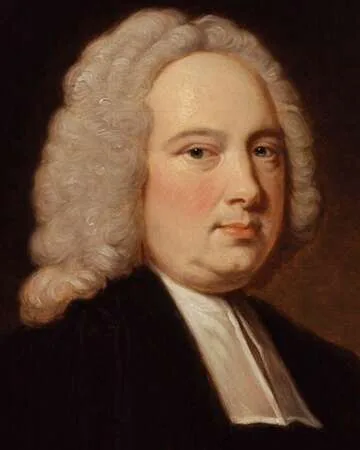
The Birth of an Astronomical Pioneer
James Bradley was born on March 26, 1693, in Shelborne, England. He went on to become one of the most significant figures in astronomy of his time. Not only did he serve as the 3rd Astronomer Royal, but he also made groundbreaking contributions that shaped our understanding of the universe. During his illustrious career, Bradley discovered the nutation of the Earth's axis, a periodic oscillation in the orientation of the Earth, which is crucial for understanding celestial mechanics.
James Bradley's Early Life and Education
Bradley was born into a world of scientific discovery and enlightenment. His early education set the foundation for his later achievements in astronomy. He pursued his studies at Oxford University, providing him with a well-rounded education that prepared him for the complexities of astronomical observations. His growing interest in mathematics and physics propelled him into groundbreaking scientific investigations.
The Discovery of Nutation
In the early 18th century, Bradley conducted careful observations that would ultimately lead to his discovery of nutation. This phenomenon was instrumental in correcting previous inaccuracies in astronomical data. His work provided a more comprehensive understanding of the Earth’s tilt and its impact on celestial observations, marking a substantial advancement in the field of astronomy.
Branches of Discoveries and Contributions
Throughout his career, James Bradley became known for his meticulous methods and prolonged dedication to observational astronomy. His appointment as the Astronomer Royal further allowed him to influence the direction of British astronomical research.
Bradley’s Role as the 3rd Astronomer Royal
As the 3rd Astronomer Royal from 1742 onward, Bradley oversaw the Royal Observatory in Greenwich. His leadership brought about improvements in telescope technology, which enhanced the accuracy of celestial measurements. His influence was crucial in bridging the gap between theoretical astronomy and practical observations.
Bradley's Legacy in Astronomy
James Bradley’s legacy continues to illumine the field of astronomy even today. The methodologies he developed for measurements remain foundational, and his discoveries paved the way for later theorists and astronomers to explore the cosmos with new vigor. His studies into light phenomena, such as aberration, further deepened our understanding of the universe.
Fun Fact
A Unique Discovery by James Bradley
One intriguing aspect of James Bradley's work is his discovery of stellar aberration, which occurs because of the finite speed of light and the motion of the Earth in its orbit. This discovery was pivotal in understanding the dynamic relationship between light and celestial motion.
Additional Resources
Recommended Reading on James Bradley
For those looking to explore more about this astronomical pioneer, consider reading Astronomy: A Very Short Introduction by Peter Frenkel and The Astronomical Revolution: Hubble and the Birth of Modern Cosmology by Hugh A. Young. These texts provide valuable insights into the history of astronomy leading up to and following Bradley's significant contributions.










 Continue with Google