


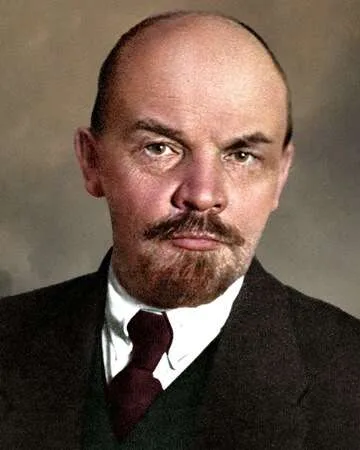
Vladimir Lenin: The Man Who Shook the World
Born on April 22, 1870, in Simbirsk, Russia, Vladimir Lenin emerged as a pivotal figure in the 20th century, forever altering the political landscape of his country and beyond. As the principal architect of the Russian Revolution, Lenin's impact on history is profound, with his ideas continuing to inspire debates on socialism and communism worldwide.
Lenin's journey began in a relatively well-off family, with his father being an education officer and his mother a skilled schoolteacher. The early death of his older brother, Alexander, who was executed for plotting to assassinate Tsar Alexander III, fueled Lenin's revolutionary spirit. Driven by a sense of injustice, he dedicated his life to overthrowing the oppressive Tsarist regime and establishing a government that could better serve the proletariat.
Lenin's Revolutionary Ideology
Lenin's ideology was rooted in Marxist theory, which he adapted to Russian conditions. This adaptation, known as Leninism, emphasized the need for a vanguard party to lead the revolution on behalf of the working class. His writings, including the famous "What Is to Be Done?", laid the theoretical groundwork for the Bolshevik Party, which he led during the October Revolution of 1917.
The October Revolution
Lenin's most significant achievement was the successful October Revolution in 1917, which culminated in the overthrow of the Provisional Government. Under his leadership, Bolshevik forces took over key government institutions in Petrograd, now St. Petersburg. This moment marked the birth of the first socialist state in the world and set the stage for the creation of the Soviet Union.
Lenin's Leadership and Legacy
Between 1917 and 1924, Lenin served as the leader of the Soviet state, navigating through civil war, foreign intervention, and economic turmoil. His policies, such as the New Economic Policy (NEP), were crucial in stabilizing the economy and ensuring survival amid chaos.
Lenin's Role in Establishing the Soviet Union
Lenin's leadership was instrumental in the formation of the Soviet Union in 1922. He centralized power and established a one-party state, prioritizing working-class empowerment. Though controversial, Lenin's policies laid the groundwork for the future of Soviet governance.
Lenin's Death and Historical Impact
Lenin died on January 21, 1924, leaving behind a complex legacy. Advocates praise him for advancing social justice and workers' rights, while critics highlight the oppressive nature of his regime. His ideas continue to provoke discussion on governance and economic systems worldwide.
Fun Fact
The Mausoleum of Lenin
One fascinating fact about Lenin is that after his death, his body was embalmed and placed on display in a mausoleum in Moscow's Red Square. This was to symbolize the triumph of the Revolution he led and to ensure that the Bolshevik ideals lived on.
Additional Resources
Recommended Reading on Vladimir Lenin
For those interested in exploring Lenin's life and impact further, consider reading "Lenin: A Biography" by Robert Service and "The State and Revolution" by Vladimir Lenin himself. These texts provide deep insights into Lenin's thoughts and the context in which he operated, enriching our understanding of his legacy.





 Continue with Google