


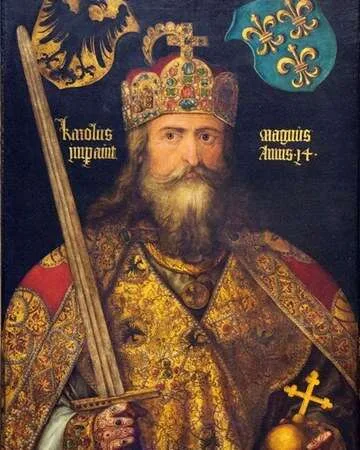
The Legacy of Charlemagne
Charlemagne, also known as Charles the Great, was born in Liège in 742 AD and became one of the most significant figures in European history. He is known as the 1st Holy Roman Emperor, a title he received in 800 AD, marking a profound transformation in the way Europe viewed leadership and governance. His reign, which lasted until 814 AD, set the foundation for the political landscape of medieval Europe.
As a leader, Charlemagne expanded his kingdom through a series of military campaigns, effectively uniting much of Western Europe under his rule. He was not just a conqueror but also a patron of the arts and education, promoting the Carolingian Renaissance, which revived learning and culture across his empire.
Charlemagne's Powerful Rule
Under Charlemagne's command, the Frankish Kingdom expanded significantly, thanks to his military strategies and diplomatic skills. He was skilled at forming alliances through marriage and securing loyalty from local rulers. His reign marked the revival of the central authority, which had been fragmented across various territories.
Importance of the Holy Roman Empire
On Christmas Day in the year 800 AD, Charlemagne was crowned Emperor by Pope Leo III, a significant moment that symbolized the fusion of Roman, Christian, and Germanic elements. This event is pivotal as it laid the groundwork for the Holy Roman Empire, influencing the relationship between the church and state in the years to come.
Charlemagne's Cultural Impact
Charlemagne's rule significantly impacted the cultural and intellectual growth in Europe. His efforts to promote education and literacy led to the establishment of schools and the preservation of classical texts, which had lasting effects on European culture.
Charlemagne’s Support for Learning
Charlemagne had a vision of a learned society and encouraged the education of his subjects. He invited scholars to his court and founded schools to educate clergy and laypeople alike, which revitalized arts and literature throughout his reign.
Church Reforms Influenced by Charlemagne
Additionally, Charlemagne implemented numerous reforms in church governance, ensuring that it remained closely aligned with his government. He believed that a well-educated clergy was essential for maintaining moral integrity and effective governance across his vast empire.
Fun Fact
Charlemagne’s Influence on Revival of Trade
Interestingly, Charlemagne's empire became a hub for trade during his reign, effectively reviving commerce and travel across previously fragmented regions, which fostered not only economic growth but also cultural exchanges between different peoples.
Additional Resources
Recommended Reading on Charlemagne
If you wish to explore more about this influential character, consider reading “Charlemagne: Father of Europe” by Jeffrey L. Kahn or “The Life of Charlemagne” by Einhard, which provide detailed insights into his life and legacy.










 Continue with Google