


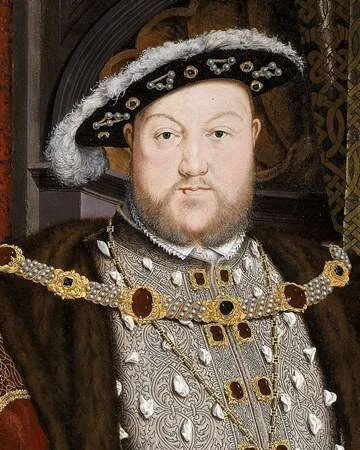
Henry Tudor's Ascendancy in 1503
On February 20, 1503, a significant milestone in English history occurred when Henry Tudor, soon to be known as Henry VIII, was formally appointed as the Prince of Wales. This appointment marked his status as the heir apparent to the English throne, a position that placed him under the watchful eyes of both the nobility and the common people of England. This pivotal moment was not simply a ceremonial title; it solidified the Tudor dynasty's claim to royal legitimacy following the tumultuous Wars of the Roses.
Henry VIII: A Future King with Great Expectations
Henry VIII was born on June 28, 1491, in Greenwich, to King Henry VII and Elizabeth of York. His childhood resembles a tale of privilege interspersed with the heavy burden of expectation. Being named the heir apparent, Henry was seen as a beacon of hope for unifying the factions of the English throne that had fought during the civil conflicts. His parents’ marriage, which united the feuding houses of Lancaster and York, awaited being passed onto their firstborn son.
The Role of Prince of Wales: Responsibilities and Challenges
As the Prince of Wales, Henry was groomed for kingship, receiving an education that emphasized not only political astuteness but also the ideals of chivalry and the governance of the future realm. With his title came responsibilities, including court appearances and the management of Welsh estates, which he undertook with fervor. The lineage associated with this title also secured Henry's place as the rightful successor following the demise of his father, further stabilizing the monarchy during a tumultuous era.
The Turning Point for the Tudor Dynasty
The appointment of Henry as heir apparent in 1503 was a defining moment for the Tudor dynasty as it laid the groundwork for future transformation under his rule. With his ascension, Henry VIII would go on to transform England in ways few could have anticipated, becoming notorious for his six marriages and the monumental shift whereby the Church of England broke away from the Roman Catholic Church.
The Impact of His Reign
Henry's reign was characterized by significant cultural and political shifts, which started from the very moment he was deemed the Prince of Wales. His ambition pushed the boundaries of traditional governance, influencing relationships, the church, and even women’s roles in society. These changes would resonate throughout the future of England, altering its history and shaping its identity.
The Legacy of Henry Tudor
Ultimately, Henry's legacy can be traced back to this appointment in 1503, as he transitioned from a young prince to one of England's most notorious monarchs. His decisions as king—especially the establishment of the Church of England—forever shifted the religious and political landscapes of his nation, redefining the monarch’s role in governance.
Fun Fact
Henry VIII's Surprising Talent
Despite his tumultuous reign, one interesting fact about Henry VIII is that he was an accomplished musician and composer. His passion for music was showcased in the many songs he wrote, illustrating that his talents extended beyond the royal court.
Additional Resources
Recommended Reading on Henry VIII
For those interested in learning more about Henry VIII, consider reading "The Six Wives of Henry VIII" by Alison Weir and "Henry VIII and His Court" by Alison Weir for a deeper exploration into his life and the intricate dynamics of his reign.











 Continue with Google