


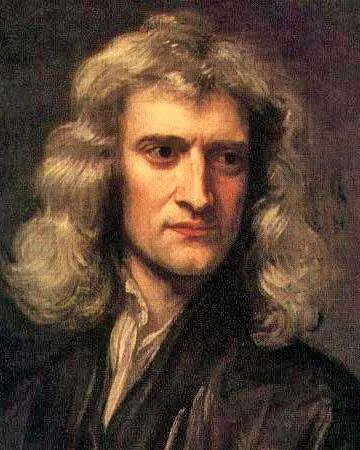
The Birth of Isaac Newton
Isaac Newton, one of the most influential scientists in history, was born on January 4, 1643, in the quaint village of Woolsthorpe-by-Colsterworth, England. His life and work laid the foundation for classical mechanics, and his discoveries remain pivotal to our understanding of the physical world.
Newton's birth occurred during a tumultuous time in England, characterized by political upheaval and scientific exploration. Raised primarily by his grandmother after his father's death, Newton was a solitary child who found solace in learning. His thirst for knowledge would eventually lead him to Cambridge University, where he ignited his passion for mathematics and natural philosophy.
Isaac Newton's Contributions to Physics
Newton is best known for his formulation of the laws of motion. These three fundamental principles not only describe how objects move under various forces but also forever changed how we approach physics. His first law states that an object at rest stays at rest, while an object in motion remains in motion unless acted upon by a force.
The Law of Universal Gravitation
Alongside his laws of motion, Newton's law of universal gravitation is perhaps his most recognized achievement. He posited that every mass attracts another mass, laying the groundwork for understanding gravitational forces. This profound insight into the nature of forces was essential for later advancements in physics and astronomy.
Isaac Newton's Legacy
The impact of Newton's work is incredible, influencing not just science but also philosophy and culture. His meticulous methods and emphasis on empirical evidence transformed how scientific inquiry was pursued.
Newton's Mathematical Innovations
In addition to his physical theories, Newton made significant contributions to mathematics, including the development of calculus. This branch of mathematics enables the analysis of changing systems and is widely used in various scientific fields today.
Newton's Influence on Astronomy
Newton's laws revolutionized astronomy. By applying his principles, astronomers could better predict celestial phenomena, leading to a deeper understanding of our universe. His work was foundational for later astronomers, including Johannes Kepler and Albert Einstein.
Fun Fact
Newton's Fascination with Alchemy
Many people are surprised to learn that Isaac Newton was deeply interested in alchemy, which he studied extensively as part of his quest to uncover the mysteries of the universe. His alchemical writings, although not well known, reveal a side of his intellect that sought to understand not just the physical but also the mystical aspects of existence.
Additional Resources
Recommended Reading on Isaac Newton
For those wishing to delve deeper into the life and contributions of Newton, consider reading "The Life of Isaac Newton" by Richard Westfall and "Isaac Newton: The Last Sorcerer" by Michael White, both of which provide comprehensive insights into his groundbreaking work.










 Continue with Google