


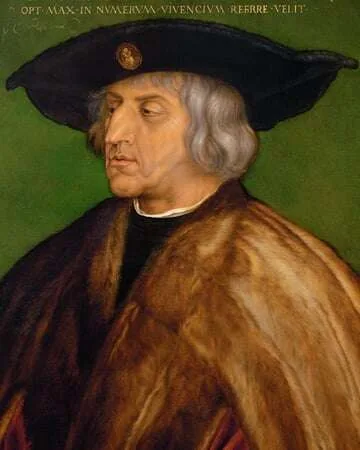
The Historic Event of 1508: Maximilian I’s Imperial Title
In an unconventional turn of events, Maximilian I, the Archduke of Austria, boldly declared himself Emperor of the Romans in 1508 without undergoing the traditional coronation ceremony. This significant moment marked a shift in the power dynamics of the Holy Roman Empire, reflecting both the evolving nature of imperial authority and the changing political landscape of Europe during the Renaissance.
Maximilian I’s Ascendancy
Born on March 22, 1459, in Wiener Neustadt, Austria, Maximilian I was a key figure in European politics, noted for his ambitious strategies and strong sense of rulership. His rise to power in the Holy Roman Empire can be traced back to his careful marriage alliances and military prowess, which helped consolidate a vast Habsburg influence across Europe. Under his reign, the concept of the Holy Roman Empire began to evolve from being a predominantly symbolic title to one of actual governance, challenging longstanding traditions.
A New Approach to the Imperial Title
By assuming the imperial title in 1508 without a formal coronation, Maximilian I circumvented the customary rituals that were historically required to legitimize an emperor's rule. This act not only illustrated his confidence and authority but also highlighted a growing trend where the Habsburgs sought to redefine the imperial throne to strengthen their grip over Austria and the broader Empire.
The Implications of His Rule
Maximilian I’s choice to assert his title without traditional rites sent ripples through the political community of his time, influencing how subsequent rulers approached the symbolism and acknowledgment of rule in the Holy Roman Empire.
Strengthening Habsburg Power
With this new maneuver, Maximilian I not only consolidated his own power but also paved the way for future Habsburg leaders to claim authority with differing interpretations of legitimacy. His reign sparked debates over the necessity of the coronation and was pivotal in shaping future governance practices within the Empire.
A Change in Imperial Legacy
This unprecedented action by Maximilian I laid the groundwork for a more centralized Habsburg Empire, allowing future emperors to adopt similar approaches, ultimately changing the course of imperial tradition and political influence throughout Europe.
Fun Fact
Maximilian I’s Interesting Fact
Did you know that Maximilian I was not only a ruler but also a patron of the arts? His reign is often associated with the flourishing of Renaissance culture in the Empire, making him a key figure in promoting artistic innovations.
Additional Resources
Recommended Reading on Maximilian I
If you wish to learn more about the influential life of Maximilian I, consider reading "The Habsburgs: A New History" by J. M. Roberts or "Maximilian I: The Holy Roman Emperor" by Australian historian Barbara Stollberg-Rilinger for insightful perspectives.











 Continue with Google