


Understanding the Historical Moment of 1918
In the wake of World War I, the year 1918 marked a pivotal change for the Baltic nations of Estonia, Latvia, and Lithuania. These countries, newly independent after centuries of foreign domination, set a dramatic tone for the future—not just politically, but also culturally. One significant development during this period was the shift from the Julian calendar to the more accurate Gregorian calendar, a change that would align these nations more closely with the rest of Europe.
The Transition from Julian to Gregorian Calendar
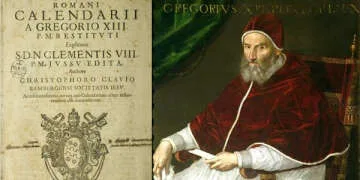
The Julian calendar, introduced by Julius Caesar in 46 BC, had been in use for over 1,600 years, but its deficiencies in accuracy became increasingly apparent. By the early 20th century, the Gregorian calendar, adopted in 1582 by Pope Gregory XIII, had demonstrated its superiority in managing the discrepancies between the calendar year and the solar year. The decision to adopt the Gregorian calendar in 1918 was thus not merely administrative; it represented a broader ambition for modernization and alignment with European norms.
Impact on National Identity
The adoption of the Gregorian calendar in Estonia, Latvia, and Lithuania was interwoven with a burgeoning sense of national identity. As these nations emerged from the shadows of imperial rule, they sought to establish cultural practices that distanced them from their past oppressors. By adopting a calendar that symbolized modernity, they reaffirmed their commitment to independence and progress.
Significance of Calendar Reform
Calendar reform played a profound role in shaping societal structures, influencing everything from business to education and public holidays in 1918.
Economic and Administrative Advantages
The Gregorian calendar offered practical benefits for Estonia, Latvia, and Lithuania. It standardized timekeeping and improved trade relations with other nations. This reliability was essential for negotiations in a post-war Europe seeking to stabilize and rebuild. The switch to a widely recognized system facilitated smoother economic interactions across borders.
Unification with the European Community
Adopting the Gregorian calendar also signified a desire for integration within the European community. By aligning with European countries that had already made this transition, nations like Estonia, Latvia, and Lithuania could participate more openly in diplomacy and cultural exchanges. This step was emblematic of their commitment to taking a seat at the European table.
Fun Fact
Interesting Tidbit about the Calendar Transition
The shift to the Gregorian calendar was met with various public reactions. In some cases, local populations were initially resistant, as changing familiar traditions can often be a challenging process. However, over the years, this change became a normalized aspect of life across the Baltic nations.
Additional Resources
Recommended Reading on Baltic History
For those interested in exploring more about the history of Estonia, Latvia, and Lithuania, consider reading "The Baltic States: A History" by Diana L. Paxson or "Baltic Independence and the Soviet Collapse" by Andreas J. E. Muszynski. These works delve deeper into the rich histories and identities of the Baltic nations, including their journey toward independence and modernity.












 Continue with Google