


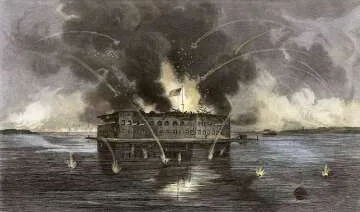
Understanding the Battle of Fort Sumter and Its Significance
The Battle of Fort Sumter marked a pivotal moment in the American Civil War, as it was here that the first shots were fired on April 12, 1861. After 34 hours of relentless bombardment, the Union-held fort surrendered to the Confederates, setting the stage for a bloody conflict that would last four long years. This event not only highlighted the deepening divide between the North and the South but also galvanized both sides towards war, as the implications of this battle stretched far beyond the fort's surrender.
The Fort and Its Location
Situated in Charleston Harbor, South Carolina, Fort Sumter was a fortified structure pivotal for the Union to maintain control over the southeastern coastline. When the fort was constructed in the 1820s and 1830s, its strategic location was intended to protect the harbor's shipping lanes. However, as tensions escalated between the southern states, which were pushing for succession, and the federal government, the fort became a flashpoint for conflict.
Summary of Events Leading Up to the Battle
In December 1860, South Carolina became the first state to secede from the Union, and soon after, other Southern states followed suit as they sought to establish the Confederate States of America. As the Union troops, led by Major Robert Anderson, remained holed up in Fort Sumter, the Confederacy aimed to assert its control over the territory. This buildup of tension culminated in the bombardment that began on April 12, 1861, when Confederate artillery opened fire, thus igniting the war.
The Aftermath of the Battle and Its Consequences
The surrender of Fort Sumter on April 13, 1861, was significant in multiple respects. First, it marked the official beginning of the Civil War, uniting many Northerners and Southerners alike, and leading the Union to mobilize in earnest against the rebellion. The fall of Fort Sumter had public implications too; it heightened Northern sentiments against the Confederacy, resulting in an influx of volunteers to fight.
Immediate Military Reactions
Following the surrender, President Abraham Lincoln called for 75,000 volunteers to suppress the rebellion, a decision that would further galvanize the southern states into action. This call to arms solidified the perception of the conflict as a war not just for the preservation of the Union, but eventually for freedom, as issues of slavery became more pronounced as the war progressed.
Long-term Impacts on American Society
The Battle of Fort Sumter also intensified the sectional divide in America. As battles continued throughout the war, the ideological differences between the two sides would harden, ultimately leading to the pivotal abolition of slavery and establishing a new social order. The war would alter the course of American history, shaping the nation's future.
Fun Fact
What Happened to Fort Sumter?
Interestingly, after its surrender, Fort Sumter was once again recaptured by Union forces in 1865 during the later stages of the Civil War. The fort remains a symbol of the conflict and is preserved as a National Monument today.
Additional Resources
Recommended Reading on the Battle of Fort Sumter
For those interested in exploring more about this historical event, consider reading "Fort Sumter: The Story Behind the Battle" or "The Civil War Begins: A History of Fort Sumter". These books provide deeper insights into the significance and context of this battle.











 Continue with Google