


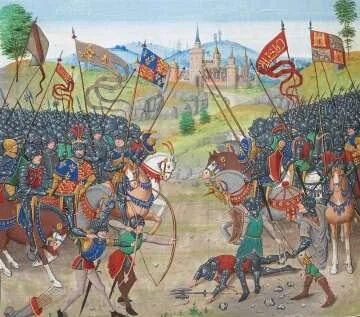
The Battle of Navarrete: A Clash of Powers
The Battle of Navarrete took place on April 3, 1367, near Nájera, in the region of La Rioja, Castile. This battle was a significant conflict during the turbulent period of the Castilian Civil War, a struggle for power between King Peter of Castile and his half-brother, Henry II of Castile. Peter, known as the Cruel, sought the help of a powerful alliance formed by Edward the Black Prince of England, John of Gaunt, and leaders from Aquitaine, Majorca, and Navarra to regain his throne and defeat his adversaries.
Key Figures in the Battle of Navarrete
Among the crucial players in this battle, King Peter of Castile, the proclaimed ruler of Castile, emerged as a controversial leader. His alignment with Edward the Black Prince, a renowned military commander and the son of King Edward III of England, marked a pivotal moment in English and Iberian relations. Meanwhile, John of Gaunt, the Duke of Lancaster and Peter's cousin, contributed significantly to the Calvary forces.
Count Henry of Castile: The Opposition
On the opposing side, Count Henry of Castile, a central figure in the civil conflict, represented the faction that sought to dethrone Peter. This battle tested Henry’s resolve and the strength of his allied forces as they confronted the might of the well-coordinated coalition led by King Peter and his English allies.
The Battle Unfolds
The engagement at Navarrete was characterized by fierce combat and strategic maneuvers. The allied forces of King Peter, bolstered by English troops, employed their superior cavalry skills to gain ground against Henry's forces, which were less cohesive. The battle ended in a decisive victory for the coalition, significantly impacting the power dynamics within Castile.
Aftermath of the Battle of Navarrete
The aftermath of the Battle of Navarrete saw King Peter reinstated on the throne, but his reign continued to be marred by internal strife and further conflicts. The victory not only reaffirmed the political influence of Peter but also highlighted the role of foreign alliances in the affairs of the Iberian Peninsula.
Historical Significance of the Battle
The significance of the Battle of Navarrete extends beyond its immediate military outcome. It also represented the increasing involvement of English nobility in Iberian conflicts and set a precedent for future engagements between these regions. Moreover, the battle marked the shift toward a more centralized state under Peter, despite his brutal reputation.
Fun Fact
A Unique Feature of The Battle
An interesting aspect of the battle was that it involved a notable use of longbowmen, which were crucial in English military tactics. The effectiveness of these archers played a decisive role in weakening the Castilian forces.
Additional Resources
Recommended Reading on The Battle of Navarrete
For those wanting to delve deeper into this pivotal event, read "The Hundred Years War" by Desmond Seward or "The Black Prince: Edward of Woodstock" by S. H. C. B. M. Earthy for more detailed accounts and analyses of the military strategies of the time.







 Continue with Google