


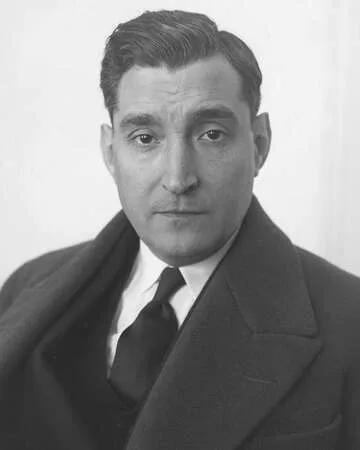
The Early Life of António de Oliveira Salazar
António de Oliveira Salazar was born on April 28, 1889, in Vimieiro, a small village in Santa Comba Dão, Portugal. Growing up in a modest family, Salazar was exposed to the challenges of rural life, shaping his views and aspirations. He was a brilliant student, quickly showing promise in academics, which led him to pursue higher education at the University of Coimbra, where he studied law.
His early life and education instilled in him a deep sense of nationalism and a desire for political reform, which would later manifest in his role as a dictator. He was deeply influenced by the political instabilities in Portugal during the early 20th century, which included a series of ineffective governments and social unrest. Salazar’s dedication to economics and finance, along with his strong belief in order and stability, were characteristics that defined his future leadership.
António de Oliveira Salazar’s Education
Enrolling at the University of Coimbra, António de Oliveira Salazar quickly distinguished himself academically. Pursuing his degree in economics, he developed ideas that would later serve as the foundation for his political ideology. Salazar was noted for his disciplined study habits and his inclination towards conservative and monarchist principles.
The Political Rise of António de Oliveira Salazar
Salazar’s ascent in Portuguese politics began in the early 1920s when he served as the Minister of Finance. His ability to stabilize the Portuguese economy caught the attention of political leaders, and in 1932, he was appointed Prime Minister. His experience in finance gave him the tools to assert control over the country, eventually leading to the establishment of the Estado Novo (New State) in 1933, a corporatist authoritarian regime.
Dominion Over Portugal and the Estado Novo
Once in power, Salazar dominated the political landscape of Portugal for over three decades. He implemented strict censorship, political repression, and a series of policies designed to strengthen state control. Through the Estado Novo, he sought to create a vision of a modern, self-sufficient Portugal, emphasizing agriculture and traditional values.
Salazar’s Policies in the Estado Novo
Salazar's regime was characterized by policies that aimed to suppress dissent and promote a nationalist agenda. His government prioritized economic stability at the expense of political freedom, enforcing strict laws against opposition while promoting Catholic values. Under Salazar, Portugal remained neutral during World War II, which he used to reinforce his image as a pragmatic leader.
The Fall of Salazar’s Regime
Even though Salazar’s regime fostered a degree of economic growth, it was marked by significant social oppression. As the world moved towards greater freedoms after the war, pressures mounted against authoritarian rule worldwide, eventually leading to the Carnation Revolution in 1974, just a few years after Salazar’s death in 1970—forever marking the end of his nearly four-decade-long control over Portugal.
Fun Fact
Salazar’s Fascination with Economics
Interestingly, António de Oliveira Salazar initially pursued a career in academia but was eventually drawn into politics due to his financial expertise. His belief in the power of economics was instrumental in shaping his political ideology and governance style.
Additional Resources
Recommended Reading on António de Oliveira Salazar
For those interested in exploring more about Salazar and his impact on Portuguese history, consider reading “Salazar: A Political Biography” by Ralph McLean and “The Salazar Regime: A Political History of Portugal” by Catherine A. A. De Alacon. These books provide in-depth insights into his life, policies, and the socio-political fabric of Portugal during his rule.








 Continue with Google