


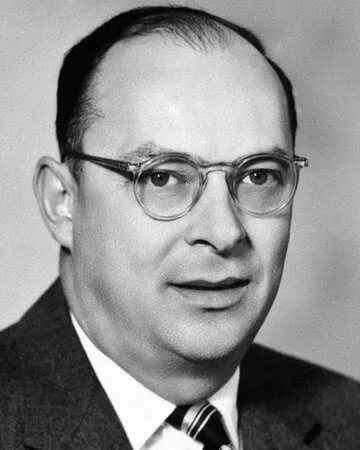
Celebrating the Birth of John Bardeen
On May 23, 1908, the world welcomed a remarkable individual, John Bardeen, who would later become a prominent figure in the fields of physics and electrical engineering. Born in Madison, Wisconsin, Bardeen's contributions to science would ultimately revolutionize technology and lay the groundwork for modern electronics. As one of the co-inventors of the transistor, his achievements would earn him not one, but two Nobel Prizes in Physics in 1956 and 1972.
Not only did Bardeen's innovations change the landscape of technology, but they also opened new doors for advancements in various scientific fields. His journey from a curious boy in Wisconsin to a Nobel laureate is truly inspiring and showcases the impact of perseverance and intellect.
John Bardeen: The Early Years
Growing up in a family that appreciated education, John Bardeen excelled in academics and showed an early affinity for science and mathematics. After graduating from the University of Wisconsin with a degree in electrical engineering, he went on to pursue advanced studies at Princeton University, where he earned a Ph.D. in physics.
The Co-Invention of the Transistor
Bardeen's most significant contribution came during his time at Bell Labs, where he, along with Walter Brattain and William Shockley, invented the transistor. This groundbreaking device led to the miniaturization of electronics, forming the foundation for all modern computing and telecommunication devices.
His Legacy as a Nobel Laureate
Bardeen's groundbreaking work in the field of physics not only earned him accolades but also solidified his status as one of the most influential scientists of the 20th century. His first Nobel Prize in 1956 was shared with Brattain and Shockley for the invention of the transistor, while his second prize in 1972 acknowledged his theoretical work on superfluidity.
Recognition of John Bardeen
Throughout his career, Bardeen received numerous awards and honors that reflect his exceptional contributions to science and technology. His dedication to research and education has inspired generations of scientists and engineers.
The Impact of Bardeen's Work
The effects of Bardeen's inventions are still felt today, as the transistor remains a core component of virtually all electronic devices—from cell phones to computers. His collaboration and vision helped shape a future where technology plays an integral role in everyday life.
Fun Fact
John Bardeen's Unique Achievement
John Bardeen is one of only four people to have won the Nobel Prize in Physics twice, a testament to his continued excellence and groundbreaking contributions to science.
Additional Resources
Recommended Reading on John Bardeen
For those interested in exploring more about this remarkable scientist, consider reading The Birth of the Transistor by Dr. Robert W. Lucky or John Bardeen: A Scientist's Life by Dr. M. N. Peebles. Both books provide in-depth insights into his life and contributions to science.













 Continue with Google