


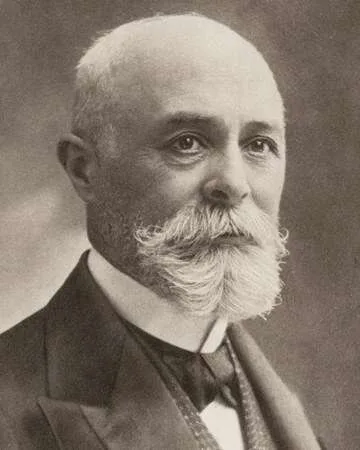
The Groundbreaking Discovery of Radioactivity
In the late 19th century, a remarkable event took place that would forever change the understanding of atomic physics: the discovery of radioactivity by French physicist Henri Becquerel. This monumental breakthrough occurred in March 1896 when Becquerel unintentionally discovered that uranium salts emitted rays that could fog photographic plates. This finding led to a series of investigations and further research, unveiling a whole new field in science.
Henri Becquerel's Pursuit of Knowledge
Henri Becquerel was born on December 15, 1852, in Paris, France. Coming from a family imbued with scientific inquiry—his father and grandfather were both notable physicists—Becquerel pursued studies in the field of physics. His initial work involved studying phosphorescent materials, but it was the uranic salts that captivated his attention. His observations during the spring of 1896 revealed that these salts were not only phosphorescent but had the unique ability to produce radiation even in the absence of light.
The Accidental Discovery of Radioactivity
Becquerel's discovery was serendipitous. After placing a uranium salt on a photographic plate wrapped in black paper, he noticed the impression it left days later, despite the plate being stored away from light sources. This unexpected fogging led him to propose that some form of energy was emitted by uranium, which he later termed radioactivity. This concept was revolutionary, challenging the existing understanding of atomic structure and energy.
Impact of Radioactivity on Science
Becquerel's discovery had profound implications, not just in physics but also in chemistry and medicine. It paved the way for future research conducted by renowned scientists such as Marie Curie and Ernest Rutherford, who expanded the field of nuclear physics and explored the properties of radioactivity in greater detail.
The Legacy of Radioactivity Research
In the years following this landmark event, the study of radioactivity led to significant advances in various fields. For instance, it contributed to the development of radiotherapy for cancer treatment, allowing for targeted destruction of malignant cells. Additionally, the discovery of radioactivity played a crucial role in understanding atomic energy, eventually leading to both nuclear power and weapons.
Scientific Community Recognition
The significance of Becquerel's discovery was acknowledged in 1903 when he, along with Marie and Pierre Curie, was awarded the Nobel Prize in Physics. This recognition solidified the importance of his contributions to modern science and highlighted the transformative potential of radioactivity.
Fun Fact
The Mysterious Source of Energy
Interestingly, Becquerel was initially unaware of the true nature of the radiation he observed. It was later determined to be a result of atomic decay— a process where unstable atomic nuclei release energy, thus focusing scientific inquiry on the inner workings of matter itself.
Additional Resources
Recommended Reading on Henri Becquerel and Radioactivity
For those interested in exploring more about Henri Becquerel and his groundbreaking work on radioactivity, consider reading "Marie Curie: A Biography" or "The Physics of Radiation". These texts provide greater insight into the life and contributions of Becquerel and his successors in the field of radioactivity.











 Continue with Google