


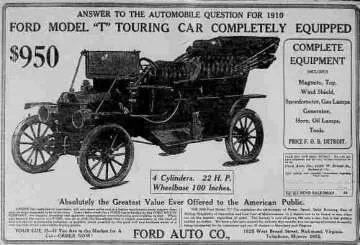
The Revolutionary Model T Car
Henry Ford's Vision
The year 1908 marked a turning point in automotive history with the introduction of the Model T by Henry Ford. Priced at $825, this groundbreaking vehicle was designed to be affordable for the average American, thus democratizing personal transportation.
Features of the Model T
The Model T was notable for its simplicity, durability, and low cost of maintenance. It was powered by a four-cylinder engine and offered improved fuel efficiency, which set a standard for future vehicles. Its innovative design allowed for easy repairs, making it a practical choice for many families.
The Birth of Mass Production
Implementing the Assembly Line
Henry Ford revolutionized the manufacturing process with the introduction of the assembly line. This innovation drastically reduced the time it took to build a car, bringing production costs down significantly. The Model T could be produced in just a few hours, making it accessible to a broader audience.
The Impact on Society
The Model T changed American society by providing unprecedented mobility. It facilitated the growth of suburbs and transformed the nation’s infrastructure. For many, the car represented freedom and opportunity, allowing them to explore beyond their immediate communities.
Fun Fact
Model T's Cultural Significance
The Model T was so influential that it earned the nickname "Tin Lizzie" and is often credited with paving the way for modern automobiles. It’s estimated that over 15 million units were sold between 1908 and 1927, solidifying Ford's place in automotive history.
Additional Resources
Recommended Reading on the Model T
For those interested in learning more about the Model T, consider reading The Model T: A Centennial History by David Ingham and Ford Model T: The Car That Changed America by Peter A. Norton. These works provide in-depth insights into the car's design and its impact on American culture.












 Continue with Google