


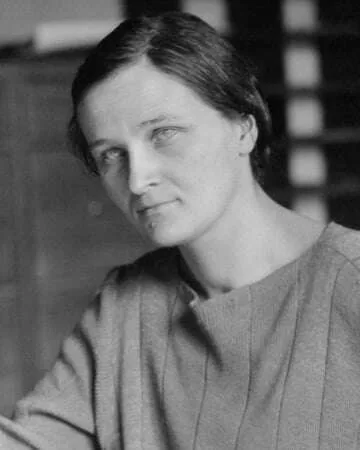
A Trailblazer in Astronomy
Cecilia Payne-Gaposchkin's Visionary Research
Cecilia Payne-Gaposchkin was a pioneering British-American astronomer and astrophysicist, who is best remembered for her groundbreaking work in the early 20th century regarding the composition of stars. Her doctoral thesis in 1925 fundamentally altered the understanding of stellar atmospheres, revealing that stars are primarily composed of hydrogen and helium, not molten rock as previously thought. This revolutionary idea challenged the prevailing theories of the time and laid the groundwork for modern astrophysics.
Recognition and Challenges
Despite her monumental contributions, Payne-Gaposchkin faced significant challenges in her career, particularly as a woman in a male-dominated field. Early in her career, her ideas were met with skepticism, and it wasn’t until later that her findings were embraced by the scientific community. Her perseverance ultimately led her to become the first woman to earn a doctorate in astronomy from Harvard University, breaking barriers for generations of women in science.
Cecilia Payne-Gaposchkin's Enduring Influence
Payne-Gaposchkin's Later Years
Cecilia continued to work at Harvard where she played a crucial role in the development of programs that would promote astronomy. Her dedication and commitment to education helped nurture countless young scientists. Even in her later years, she remained an active participant in the scientific community and contributed to projects that advanced our understanding of stellar evolution.
The Legacy of Her Work
Cecilia Payne-Gaposchkin passed away on 7th December 1979 at the age of 79. Her immense contributions to astronomy extended far beyond her lifetime, influencing subsequent research and inspiring generations of astronomers. Today, she is celebrated as a key figure in the field, and her insights into the composition of the universe remind us of the importance of scientific inquiry and perseverance.
Fun Fact
Cecilia Payne-Gaposchkin's Interesting Fact
A lesser-known fact about Cecilia Payne-Gaposchkin is that she was instrumental in the establishment of the Harvard Observatory’s stellar classification system, which significantly advanced the field of astrophysics.
Additional Resources
Recommended Reading on Cecilia Payne-Gaposchkin
For those interested in learning more about Cecilia and her contributions, consider reading "Cecilia Payne-Gaposchkin: An Autobiography" which provides insights into her personal and professional journey in astronomy.





 Continue with Google