


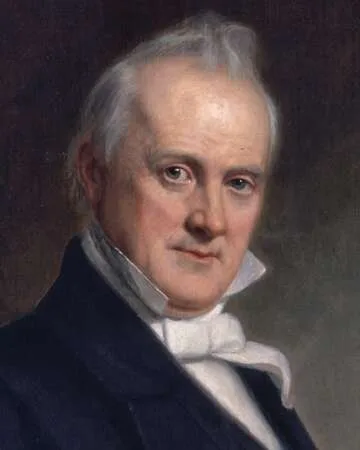
James Buchanan: The 15th President of the United States
James Buchanan, born on April 23, 1791, in Cove Gap, Pennsylvania, served as the 15th President of the United States from 1857 to 1861. His presidency was marked by significant challenges, primarily regarding the issue of slavery, which was deeply dividing the nation. Buchanan's tenure came just before the American Civil War, a time when the country was profoundly unsettled.
Despite his intentions to maintain peace between the North and South, Buchanan's lack of decisive action in the face of growing tensions did little to prevent the impending conflict. His administration struggled with various controversies, including the Dred Scott decision and the fallout from "Bleeding Kansas," both of which exacerbated sectional divides.
James Buchanan's Early Life and Education
James Buchanan grew up in a wealthy household in Pennsylvania, where he received a private education before attending Dickinson College. He graduated in 1809. His early career began in law, and he was briefly a member of the Pennsylvania legislature. Buchanan's political career began in earnest when he was elected to the U.S. House of Representatives, marking the start of a long and varied political path.
Presidential Election of 1856
Buchanan ran for President in 1856 as the Democratic candidate, largely positioning himself as a moderate who could unify the nation. He won the election against Republican John C. Frémont and Fillmore of the Know Nothing Party. His administration faced immediate challenges, including the ongoing battle over slavery's expansion into new territories, a contentious issue that would define much of his presidency.
Challenges During Buchanan's Presidency
During his presidency, Buchanan faced numerous political crises. The conflict over slavery intensified, leading to violent confrontations in Kansas as pro-slavery and anti-slavery factions clashed. Buchanan supported the Lecompton Constitution, which sought to admit Kansas as a slave state, further polarizing the nation.
The Dred Scott Decision
In 1857, the Supreme Court delivered the Dred Scott decision, ruling that African Americans could not be citizens and that Congress had no authority to regulate slavery in the territories. Buchanan supported this ruling, believing it would settle the slavery debate. Instead, it inflamed sectional tensions and alienated many in the North.
Secession and the Prelude to Civil War
As Buchanan's presidency neared its end, several Southern states began to secede from the Union following the election of Abraham Lincoln in 1860. Buchanan held the controversial belief that secession was illegal but that he had no constitutional authority to stop it. His inaction during this critical period led to widespread criticism and is seen as a significant factor in the slide toward the Civil War.
Fun Fact
James Buchanan's Unique Status in History
James Buchanan is known for being the only bachelor president in American history. He remained single throughout his life, and he often referred to his niece, Harriet Lane, as a first lady during his administration.
Additional Resources
Recommended Reading on James Buchanan
For those interested in learning more about James Buchanan, consider reading “James Buchanan: The American Presidents Series” by Jean Baker, and “Buchanan: The Presidency, 1857-1861” by John W. F. Dorr. Both provide valuable insights into his controversial presidency and personal life.







 Continue with Google