



Introduction to Newton's Groundbreaking Optics Paper
In 1672, a significant milestone in scientific history unfolded when Isaac Newton presented his first optics paper before the esteemed Royal Society in London. This paper, titled "A New Theory about Light and Colors," showcased Newton's pioneering discoveries in the realm of light and laid the foundation for modern optics.
Isaac Newton's Contribution to Optics
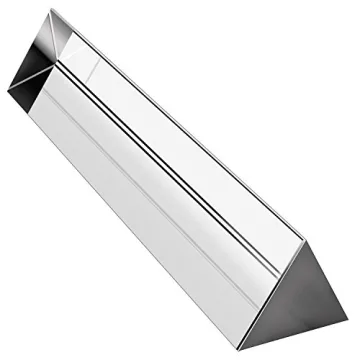
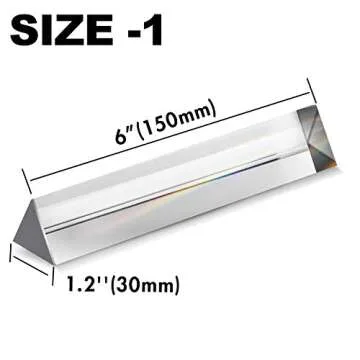
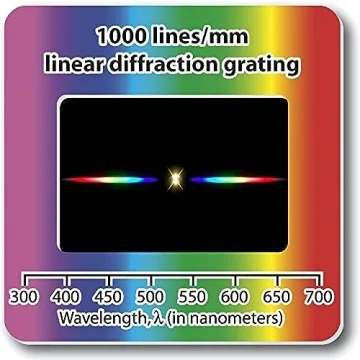
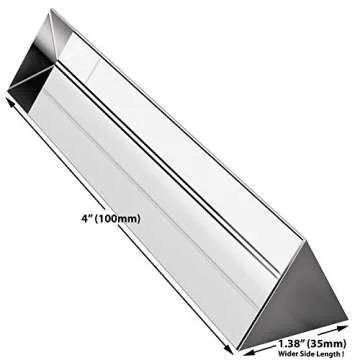
Isaac Newton's early work in optics involved experiments with prisms, which led to his revolutionary theory on the nature of light. Through systematic analysis, he discovered that white light is composed of various colors that can be separated and recombined. His experiments demonstrated that when white light passes through a prism, it refracts at different angles, producing the visible color spectrum.
The Paper's Impact on Science
Newton's presentation not only garnered acclaim but also sparked debate among the scientific community regarding the nature of light. His findings challenged the prevailing theories of light at the time and shifted the scientific discourse towards a more empirical approach to understanding natural phenomena. Newton's insights influenced subsequent research and established him as a central figure in the scientific revolution.
Debate and Acceptance in the Scientific Community
The presentation of Newton's optics paper was met with varying reactions from his peers at the Royal Society. While some scientists embraced his revolutionary ideas, others were skeptical. This discourse exemplified the rigorous standards of the scientific method as researchers grappled with accepting new theories that challenged traditional beliefs.
The Key Opponent: Robert Hooke
One of Newton's fiercest critics was Robert Hooke, who presented alternative theories concerning light. Hooke argued for a particle theory of light, contrasting with Newton's wave nature. The ensuing rivalry between these two scholars propelled advancements in optical research and enriched the field.
Newton's Legacy in Optics
Isaac Newton's first optics paper was a catalyst for change, leading to innovations in scientific technique and thought. His work ignited further exploration into optics, influencing notable figures like Thomas Young and Augustin-Jean Fresnel, who expanded upon Newton's theories and ultimately helped lay the groundwork for modern physics.
Fun Fact
Newton's Notable Experiment with Prisms
Interestingly, Newton used a prism to replicate the colors of the rainbow, conducting several experiments that revealed how light could be manipulated, forever changing our understanding of optics.
Additional Resources
Recommended Reading on Isaac Newton
For those interested in exploring more about Isaac Newton and his works, consider reading "Isaac Newton" by James Gleick or "The Newtonian Revolution" by I. Bernard Cohen, which delve into the life and contributions of this remarkable scientist.







 Continue with Google