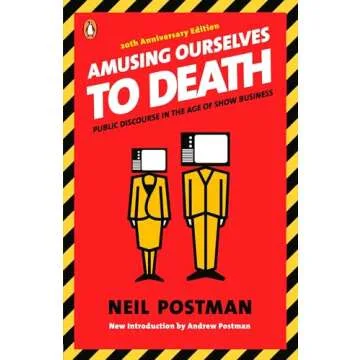
Step into the fascinating world of communication and media with
Neil Postman’s insightful work, Amusing Ourselves to Death:
Public Discourse in the Age of Show Business. Published in
1985, this seminal book has stood the test of time, delving into
how television and mass media have metamorphosed the American
public discourse into entertainment rather than informative
engagement. Postman artfully argues that a society enthralled by
television and spectacle compromises its discourse, turning...
Show more Step into the fascinating world of communication and media with Neil Postman’s insightful work, Amusing Ourselves to Death: Public Discourse in the Age of Show Business. Published in 1985, this seminal book has stood the test of time, delving into how television and mass media have metamorphosed the American public discourse into entertainment rather than informative engagement. Postman artfully argues that a society enthralled by television and spectacle compromises its discourse, turning critical issues into mere amusement. As relevant today as it was decades ago, this enlightening read encourages reflective thought about the role media plays in shaping societal norms and values, urging readers to reconsider how we consume information in an era dominated by instant gratification.
- Critical Analysis: Dive deep into Postman’s profound examination of the transition from a print-based culture to a visually-driven one.
- Engaging Writing Style: Enjoy Postman's eloquent prose that is both accessible and thought-provoking, making complex ideas digestible.
- Historical Context: Gain insight into the societal changes leading to today’s media landscape, enriched by compelling historical references.
- Timely Relevance: Explore the book's uncanny relevance in today's digital age, where sound bites and memes overshadow substantive discourse.
- Cultural Reflection: Reflect on how entertainment influences our understanding of significant political and social issues, reshaping public opinion.
Target Audience
- Students and Academics: Those studying media, communications, or sociology will find Postman’s insights invaluable.
- Media Professionals: Journalists and content creators can learn about the implications of their craft on public perception.
- Thought Leaders: Anyone interested in understanding the intersection of media, culture, and politics can benefit from Postman’s analysis.
- General Readers: Individuals curious about the impact of entertainment on society will be engaged by Postman’s compelling arguments.
Best suited for educational purposes, this book serves as a perfect conversation starter in academic settings, book clubs, or casual gatherings where media’s role in shaping conversations can be discussed. It encourages a critical approach to consuming news and information in a world rife with distractions.
- Book clubs seeking a thought-provoking theme.
- Classes focusing on media studies or political communication.
- Workshops on critical thinking and media literacy.
Comparison with Competitors
Unlike other works that merely touch on the superficial effects of media, Amusing Ourselves to Death provides a comprehensive critique of the entire landscape of public discourse, making it a seminal work often compared to other media critiques like Catch-22 by Joseph Heller and Four Arguments for the Elimination of Television by Jerry Mander. Where those may focus on anecdotes or specific aspects of media's impact, Postman delivers a detailed analysis linking cultural and political ramifications directly to the rise of television, making it essential reading for anyone looking to understand the complexities of media influence in contemporary society.
Why You will Love This Product?
This book not only opens your eyes to the realities of modern communication but also cultivates a deeper appreciation for meaningful discourse. By engaging with Postman’s arguments, you’ll enhance your critical thinking skills, cultivate your understanding of media literacy, and develop a discerning eye for the information you consume daily. You’ll leave the book empowered to have more substantive conversations and question the narratives presented by today’s media, making this not just a read, but an enriching experience for your intellectual growth.
Less












 Continue with Google