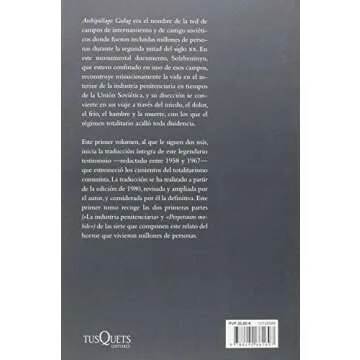
The iconic Archipiélago Gulag I by Aleksandr
Solzhenitsyn is not merely a book; it is a powerful indictment of
the horrors endured by millions in the former Soviet Union. This
heart-wrenching exploration of the Soviet labor camp system is
presented through deeply personal narratives, reflecting the stark
realities of oppression and survival. As a monumental literary
achievement, it combines both historical exposition and emotional
depth, making it essential reading for anyone seeking to...
Show more The iconic Archipiélago Gulag I by Aleksandr Solzhenitsyn is not merely a book; it is a powerful indictment of the horrors endured by millions in the former Soviet Union. This heart-wrenching exploration of the Soviet labor camp system is presented through deeply personal narratives, reflecting the stark realities of oppression and survival. As a monumental literary achievement, it combines both historical exposition and emotional depth, making it essential reading for anyone seeking to understand the human condition under duress.
In this first volume of his trilogy, Solzhenitsyn artfully weaves together the stories of ordinary individuals caught in a brutal system, shedding light on the struggles against overwhelming odds. His compelling prose not only documents the atrocities but also emphasizes the resilience of the human spirit. Whether you are well-versed in Soviet history or just beginning to explore its implications, this book offers eye-opening insights that resonate through time.
- Authoritative Source: Gained from the author's own experiences as a prisoner, enhancing credibility.
- Rich Narrative: A blend of history and literature that paints vivid accounts.
- Multi-Dimensional Perspective: Offers a wide range of experiences from various individuals, providing a holistic view of the gulags.
- Awareness and Education: Serves as a crucial resource for understanding human rights violations.
- Compelling Themes: Explores justice, suffering, and resilience, resonating on multiple emotional levels.
Target Audience
- History Students: Ideal for those studying totalitarian regimes.
- Book Clubs: Perfect for engaging discussions on ethics and morality.
- Educators: A valuable addition to any curriculum focused on history or literature.
- Activists: Insightful for those advocating for human rights and freedoms.
- Literature Enthusiasts: A must-read for fans of profound and impactful narratives.
Best Occasions to Use This Gift:
Archipiélago Gulag I is exceptionally fitting for book club discussions, where readers can delve into the complexities of its themes. With its profound insights into human rights and resilience, it’s also an excellent gift for historical anniversaries or educational purposes. Additionally, it serves well for those seeking personal reflection on society's moral choices, making it a poignant companion for anyone interested in the fabric of history.
Comparison with Competitors
When compared to other historical narratives, Archipiélago Gulag I stands out due to its intimate first-hand accounts, which create a visceral connection to the material. Many historical texts provide dry facts, yet Solzhenitsyn's work combines critical insights with compelling storytelling, allowing the reader to grasp the emotional weight of his experiences. While titles such as "The Gulag Archipelago" Series may cover similar content, this specific volume focuses deeply on personal stories, making it unique in its impact and readability.
Why You Will Love This Product?
Archipiélago Gulag I is not just a book but an experience that fosters empathy and awareness about the human spirit's enduring nature. Readers will find themselves transported into the bleak landscapes of the gulag, feeling the weight of oppression and the flicker of hope embodied in each story. This profound exploration allows you to reflect on broader societal issues while also appreciating the intricacies of individual journeys, making it an enriching addition to your bookshelf.
Less
























 Continue with Google