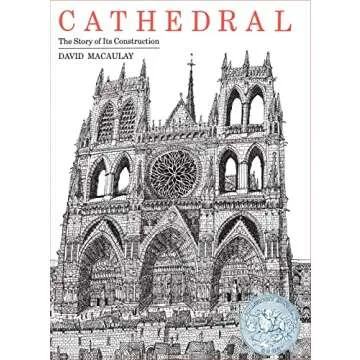
Cathedral: A Caldecott Honor Award Winner by David Macaulay
C Visit Brand Page
- 66
- 0
- 100+ Sold in the past week
- 💥 300+ people added this to wishlists
- ⏳ Only a few left — don’t miss out
- ❤️ Loved by returning buyers

 Sign in / up
7.70
Sign in / up
7.70
Explore the magnificent world of medieval architecture with "Cathedral: A Caldecott Honor Award Winner" by David Macaulay. This sleekly illustrated book takes readers on an enlightening journey back to the year 1252 in the fictional French village of Chutreaux. Here, the townspeople embark on an ambitious quest to create a cathedral destined to be the longest, widest, and most beautiful in all of France, a project that spanned an impressive 80 years. With just 80 pages, Macaulay intricately...
Show more| manufacturer | Clarion Books |
|---|---|
| height | 12 |
| weight | 2.314853751 |
| width | 0.25 |
| length | 9 |
| releaseDate | 1981-10-26T00:00:01Z |
| languages | [ Published Value = English ] [ Original Language Value = English ] [ Unknown Value = English ] |
| productGroup | Book |
"Cathedral" is ideal for readers aged 8 and above, but it can also be appreciated by adults interested in architecture and history.
No, while it is accessible for younger audiences, the rich illustrations and educational content make it appealing for adults too.
Unlike many modern architectural texts, "Cathedral" combines artistry with storytelling, making historical concepts more engaging and understandable.
Absolutely! Educators often use it in classrooms to introduce students to medieval history and architecture.
7.70







 Continue with Google