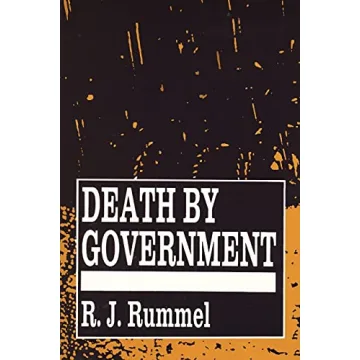
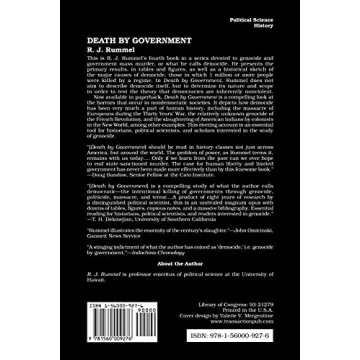
Death by Government: Genocide and Mass Murder Since 1900
R Visit Brand Page
- 118
- 0
- 100+ Sold in the past week
- 💥 300+ people added this to wishlists
- ⏳ Limited quantity — order now
- ❤️ Loved by returning buyers

 Sign in / up
Death by Government: Genocide and Mass Murder Since 1900 by R.J. Rummel is a powerful and eye-opening exploration into one of the darkest corners of human history. With meticulous research and a profound understanding of political theory, Rummel presents staggering data on how governments throughout the 20th century have systematically deprived millions of their lives. This comprehensive tome brings to light the compassionless violence perpetrated by authoritarian regimes, showcasing a total...
Show more| manufacturer | Routledge |
|---|---|
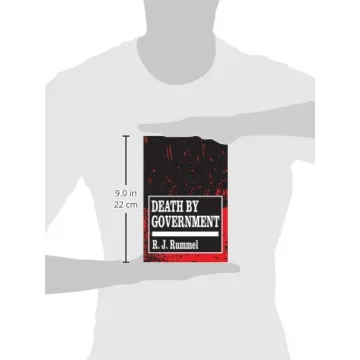
| height | 9 |
| weight | 1.79897205792 |
| width | 1.18 |
| length | 6 |
| releaseDate | 1997-01-30T00:00:01Z |
| languages | [ Published Value = English ] [ Original Language Value = English ] [ Unknown Value = English ] |
| productGroup | Book |
The book focuses on documenting and analyzing the mass murders executed by governments, particularly authoritarian and totalitarian regimes, and introduces the concept of 'democide'.
R.J. Rummel is a renowned political scientist known for his research on genocide, mass murder, and his development of the theory of democide, backed by extensive statistical methods.
This book provides critical insights into how power can corrupt and lead to brutal atrocities, offering lessons that are vital for understanding and preventing future human rights abuses.
Yes, while it presents complex data and theories, Rummel's accessible writing style makes it engaging for any reader interested in history or political matters.
It serves as a foundational resource for students studying complex historical and political dynamics, encouraging them to think critically about governance and human rights.
Readers will learn about the extent of governmental violence in the 20th century, the importance of maintaining democratic checks on power, and the human capacity for cruelty in the absence of accountability.


















 Continue with Google