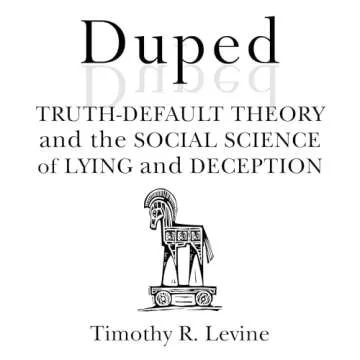
Duped: Truth-Default Theory and the Social Science of Lying and Deception
A Visit Brand Page
- 130
- 0
- 100+ Sold in the past week
- 💥 300+ people added this to wishlists
- ⏳ Limited stock — order today
- 💎 Smart pick for quality

 Sign in / up
23.88
Sign in / up
23.88
Unveil the complexities of human communication with "Duped: Truth-Default Theory and the Social Science of Lying and Deception." This riveting book delves into the fascinating intersection between psychology and social science, revealing how default assumptions of truth shape our daily interactions. Written by esteemed author, Timothy R. Levine, a leading expert in communication studies, this work brings a refreshingly analytical perspective on why we are predisposed to trust and how that...
Show more| manufacturer | Echo Point Books & Media, LLC |
|---|---|
| releaseDate | 2024-09-02T00:00:00-00:00 |
| languages | [ Published Value = English ] [ Original Language Value = English ] |
| productGroup | Audible |
The Truth-Default Theory (TDT) posits that individuals generally assume that others are telling the truth, which can lead to a higher likelihood of being deceived.
This book is ideal for students, educators, psychologists, communication specialists, and anyone interested in understanding the dynamics of truth and deception.
Readers can expect to gain insights into human communication patterns, the psychology of trust, and practical knowledge on avoiding deception in social interactions.
Yes, Levine’s engaging writing style makes complex theories relatable and understandable for both academic and general audiences.
23.88






















 Continue with Google