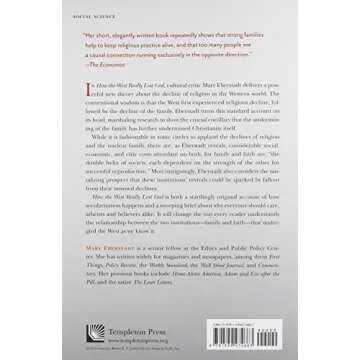
Discover the transformational ideas in "How the West
Really Lost God: A New Theory of Secularization" by
Mary Eberstadt, which dares to rethink the
perceived narrative of secularization in the West. This remarkable
work challenges conventional wisdom and presents a
paradigm-shifting perspective that examines the emotional,
sociocultural, and philosophical factors leading to a decline in
faith across Western societies. You’ll find Eberstadt's eloquent
and engaging prose...
Show more Discover the transformational ideas in "How the West Really Lost God: A New Theory of Secularization" by Mary Eberstadt, which dares to rethink the perceived narrative of secularization in the West. This remarkable work challenges conventional wisdom and presents a paradigm-shifting perspective that examines the emotional, sociocultural, and philosophical factors leading to a decline in faith across Western societies. You’ll find Eberstadt's eloquent and engaging prose makes complex theories accessible to readers, inviting both intellectual stimulation and personal reflection.
In a captivating exploration, the author argues that the secularization process is not merely a product of rational thought but is significantly influenced by societal factors including changing family structures, cultural shifts, and the decline of traditional values. This thought-provoking book provides readers with a multidimensional understanding that encompasses historical, sociological, and personal dimensions of belief and faith.
Less


















 Continue with Google