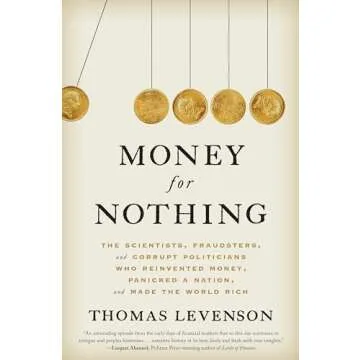
Step into a whirlwind of financial innovation and turmoil with
"Money for Nothing: The Scientists, Fraudsters, and Corrupt
Politicians Who Reinvented Money, Panicked a Nation, and Made the
World Rich". This captivating book by Levenson takes you
through the intriguing journeys of late 17th-century scientific
breakthroughs and their profound influence on finance, particularly
focusing on the infamous South Sea Bubble that rocked the markets
and transformed the approach to money and debt. With...
Show more Step into a whirlwind of financial innovation and turmoil with "Money for Nothing: The Scientists, Fraudsters, and Corrupt Politicians Who Reinvented Money, Panicked a Nation, and Made the World Rich". This captivating book by Levenson takes you through the intriguing journeys of late 17th-century scientific breakthroughs and their profound influence on finance, particularly focusing on the infamous South Sea Bubble that rocked the markets and transformed the approach to money and debt. With its excellent narrative intertwined with rigorous research, it offers an engaging look at how speculative ventures reshaped British finance and influenced global economics.
- Unique Historical Insights: Discover the intertwining of scientific discoveries and financial revolutions that paved the way for modern finance.
- Engaging Storytelling: Levenson masterfully balances academic rigor and entertaining narrative, making it accessible to both scholars and casual readers.
- Comprehensive Analysis: The book delves into the psychological aspects of investing, cautioning against bubbles that can arise during periods of unchecked optimism.
- Rich Contextual Background: It provides invaluable context on Britain's rise as a global power against the backdrop of its financial practices and military efforts.
- Cautionary Tales: Drawing parallels between historical financial bubbles and modern-day markets, the author emphasizes the lessons learned and the importance of skepticism in investing.
Target Audience
- History enthusiasts interested in the evolution of modern finance.
- Students and scholars in the fields of economics and history seeking a comprehensive view of the South Sea Bubble.
- Investors and finance professionals wanting to understand past market behaviors and their implications.
- Readers curious about the intersection of science, politics, and finance.
- Anyone interested in cautionary tales of economic bubbles and lessons for today's market.
Best Occasions to Use This Gift: This masterpiece makes a perfect gift for those celebrating milestones such as graduation from business or economic fields, or for anyone looking to broaden their understanding of financial history during enlightening literary discussions. It's also a thoughtful present for book clubs focusing on economic themes.
- Graduation gifts for students of finance or economics.
- Book club selections for those who enjoy historical narratives.
- Gifts for financial professionals seeking insights into past market trends.
- Commemoration of anniversaries in finance or economic events.
Comparison with Competitors
While many books tackle the subject of financial history, "Money for Nothing" distinguishes itself with its blend of rigorous academic research and compelling storytelling. Unlike other texts that may lean heavily towards dry data, Levenson's narrative style offers readers a vivid journey through historical events. The depth of analysis regarding the psychological aspects of investing sets it apart from more simplistic accounts, making it essential reading for both novices and seasoned experts.
Why You Will Love This Product?
"Money for Nothing" is more than just a historical account; it is a profound exploration of human behavior in the face of financial temptation. The relatable characters, intertwined with the economic narrative, provide readers with a captivating understanding of past mistakes and triumphs. It challenges you to reflect on your perceptions of money and investment, encouraging a critical view of modern-day financial practices and the importance of prudent decision-making.
Less







 Continue with Google