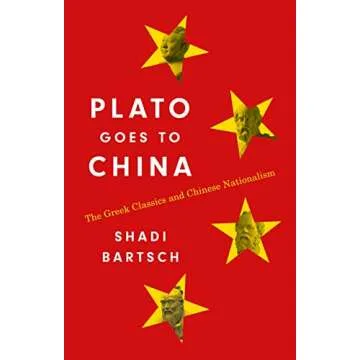
Discover the profound insights embedded in Shadi Bartsch's
captivating work, which bridges the intellectual gap between Greek
philosophy and its resounding impact on Chinese thought. This book
serves as an illuminating guide for anyone keen on understanding
how ancient wisdom shapes modern narratives. With her extensive
knowledge gleaned from years of studying Mandarin, Bartsch astutely
explores the convoluted journey of Greek philosophical thought as
it weaves through the fabrics of Chinese history.
Through...
Show more Discover the profound insights embedded in Shadi Bartsch's captivating work, which bridges the intellectual gap between Greek philosophy and its resounding impact on Chinese thought. This book serves as an illuminating guide for anyone keen on understanding how ancient wisdom shapes modern narratives. With her extensive knowledge gleaned from years of studying Mandarin, Bartsch astutely explores the convoluted journey of Greek philosophical thought as it weaves through the fabrics of Chinese history.
Through her compelling narrative, readers are taken on a historical odyssey that begins with the enthusiastic embrace of Greek classics during the early days of the Chinese Republic, highlighted by movements advocating for democracy and scientific study. Bartsch also adeptly addresses the subsequent loss of this fervor during the rise of Mao and his Communist Party, only to be rekindled during economic reforms under Deng Xiaoping. Her examination reveals how such classical texts are used to curate the contemporary philosophical landscape in China.
In a society where the classics are increasingly dismissed in the West, Bartsch highlights the significant revival of interest within China. Greek philosophical texts provide a framework through which contemporary values, including democracy and governance, are reframed to support a unique Chinese narrative. Her identification of key moments, such as the May 4th Movement and more recent philosophical engagements, draw parallels between ancient theories and modern political thinking.
With compelling case studies, Bartsch presents a thorough analysis of influential figures like Plato whose works are discussed and interpreted within the context of Chinese scholarship, offering a new and remarkable understanding of East-West relations. This book stands as a vital contribution to both the fields of philosophy and modern political theory, presenting readers with essential insights about cross-cultural exchanges and their implications.
Engage with the intricate relationship between the West and a rising superpower as you scrutinize the book’s exploration of how Greek philosophy continues to shape China's ideological frameworks. The alluring narrative crafted by Bartsch beckons scholars, students, and inquisitive minds alike to reconsider their perceptions of both Greek and Chinese thought.
Less



















 Continue with Google