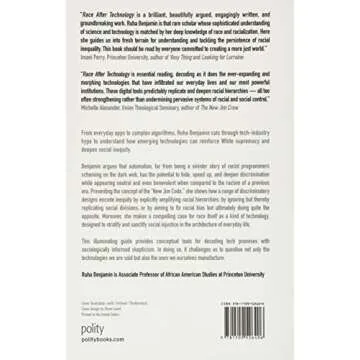
In her groundbreaking work, Race After Technology:
Abolitionist Tools for the New Jim Code, Ruha Benjamin
compellingly examines the intersections between technology, race,
and social justice. This thought-provoking book delves into how
innovative technologies often perpetuate inequalities, drawing
parallels to historic injustices reminiscent of the Jim Crow era.
Benjamin, a prominent sociologist, reveals how tools designed for
progress can equally lead to systemic oppression, urging
readers...
Show more In her groundbreaking work, Race After Technology: Abolitionist Tools for the New Jim Code, Ruha Benjamin compellingly examines the intersections between technology, race, and social justice. This thought-provoking book delves into how innovative technologies often perpetuate inequalities, drawing parallels to historic injustices reminiscent of the Jim Crow era. Benjamin, a prominent sociologist, reveals how tools designed for progress can equally lead to systemic oppression, urging readers to critically assess the implications of technological advancements in their lives. By weaving personal narrative with rigorous research, she challenges the reader to imagine how technology can be harnessed not just for efficiency, but as a means of liberation.
- Critical Analysis: The book provides a deep dive into tech's role in modern racial dynamics, linking past injustices to present technological practices.
- Engaging Narrative: Benjamin's writing captivates and educates, blending scholarly evidence with accessible language.
- Visionary Solutions: The author offers actionable insights and strategies for using technology as a tool for social justice and equality.
- Relevant Case Studies: Real-world examples illustrate how technologies can exacerbate racial biases while also positing potential paths for meaningful change.
Target Audience
- Readers interested in social justice and racial equality
- Students and educators in sociology, anthropology, and technology studies
- Professionals in tech aiming for ethical practices in AI and data science
- Activists and community organizers seeking tools for advocacy
Whether you are a student, an educator, a tech professional, or an activist, this book resonates with a diverse audience eager to understand the complexities of race within technology.
Best for initiating critical discussions about race and technology, Race After Technology is a recommended read for seminars, workshops, and book clubs focused on social justice.
- Race and Technology Workshops
- Academic Courses on Sociology and Ethnic Studies
- Community Activism Training Sessions
- Book Club Discussions on Identity and Justice
Comparison with Competitors
Unlike other texts that may skim over the implications of technological advancements, Benjamin’s work uniquely integrates personal stories with sociological research. While authors like Shoshana Zuboff address digital surveillance, Benjamin focuses specifically on racial implications, making it a necessary complement to the existing literature. With its rich analysis of both contemporary issues and historical context, Race After Technology stands out as a must-read for anyone serious about racial justice in the digital age.
What sets this book apart is its ability to not only critique existing systems but also empower readers with tools for advocacy, offering a roadmap for future egalitarian technological practices.
Why You Will Love This Product?
Readers will find Race After Technology not just informative but transformative. As you navigate through its pages, you will discover the emotional weight of technology's impact on society, encouraging a deeper understanding of your relationship with digital tools. The insights gleaned from this book will not only enrich your knowledge but inspire you to engage in meaningful conversations and actions towards fostering a more equitable world. With every chapter, you can feel a growing sense of empowerment as you learn how to challenge oppressive systems and advocate for justice through technological means. This book isn't just a read; it's an invitation to be part of a movement towards liberation.
Less



























 Continue with Google