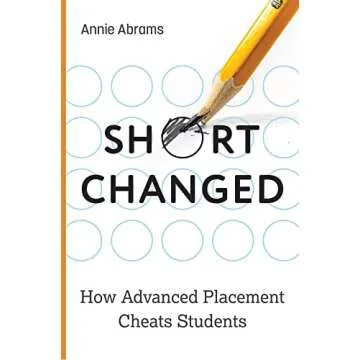
Delve into the intricate dynamics of education with
Shortchanged: How Advanced Placement Cheats
Students by Annie Abrams. This essential read offers a
comprehensive exploration of the Advanced Placement (AP) program,
unraveling the layered issues that arise from its prevalence in
today’s educational landscape. Building upon the original
intentions of the AP program, Abrams presents a meticulously
researched narrative that addresses how the increasingly
corporate-driven and standardized...
Show more Delve into the intricate dynamics of education with Shortchanged: How Advanced Placement Cheats Students by Annie Abrams. This essential read offers a comprehensive exploration of the Advanced Placement (AP) program, unraveling the layered issues that arise from its prevalence in today’s educational landscape. Building upon the original intentions of the AP program, Abrams presents a meticulously researched narrative that addresses how the increasingly corporate-driven and standardized approach to education has distorted its purpose. Over the course of a thorough 80-page examination of the AP program's origins, she elucidates the fundamental principles that have been compromised by a system more preoccupied with scores than genuine learning.
Through detailed analysis, Shortchanged addresses four core AP courses: English Language and Composition, English Literature and Composition, United States History, and United States Government and Politics. Abrams boldly critiques the restrictive curricula and the detrimental impact they have on educators and students alike. She sheds light on an education model that often disempowers teachers and reduces students to mere test-takers rather than encouraging them to be critical thinkers and engaged citizens.
More than just criticism, this book acts as a reflective mirror for educators, parents, and policymakers, prompting them to rethink the purpose of schooling in a rapidly evolving world. It challenges readers to confront the transactional nature of education, where learning is often secondary to the pressure of standardized tests and corporate influence, ultimately provoking a reimagining of educational values and priorities. Expect to walk away from this read with a deepened understanding of the need for reform in a system that often overlooks the individuality of students and the importance of democratic discourse.
Target Audience
- Educators seeking to enrich their teaching philosophy with critical perspectives
- Parents aspiring to comprehend the nuances of modern education
- Students curious about the implications of their coursework
- Policymakers aiming for informed educational reform
- Academics studying the intersection of culture and education
Occasions
This thought-provoking book makes an excellent gift for those invested in education, such as on occasions like Graduation, Teacher Appreciation Week, or Educational Reform Conferences. It’s perfect for anyone looking to engage critically with the educational principles shaping our future.
Key Features
- In-depth exploration of the AP program’s evolution and contemporary issues
- Impassioned critique of standardized educational practices
- Personal insights drawn from the author's teaching experience
- A persuasive call for renewed dialogue about educational values
- Examining the intersection of pedagogy and policy
Comparison with Competitors
In contrast to other titles that may either celebrate or outright condemn the AP system, Shortchanged provides a balanced and critical perspective. Where others might overlook the profound challenges faced by both educators and students, Abrams' compelling narrative urges a participant's reckoning with societal expectations and the true purpose of education.
Emotional Appeal
This book strikes a chord with anyone who has felt the weight of standardized testing and its toll on creativity and emotional growth. It serves as a vital reminder that education must prioritize the nurturing of the whole student, preparing them not only for exams but equipping them for life beyond the classroom.
Less



















 Continue with Google