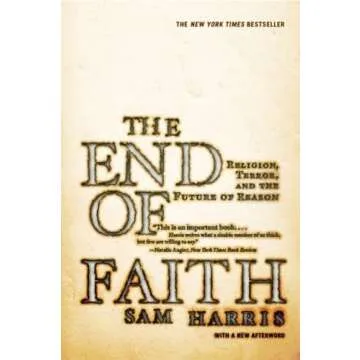
The End of Faith: Religion, Terror, and the Future of Reason by
Sam Harris is an audacious examination of the
poignant interplay between faith and rationality. This compelling
narrative, which nabbed the prestigious 2005 PEN/Martha
Albrand Award for Nonfiction, digs deep into the
detrimental effects of dogmatic beliefs on humanity. With a rich
academic background in philosophy and
neuroscience, Harris elaborates on how deeply ingrained
religious ideologies...
Show more The End of Faith: Religion, Terror, and the Future of Reason by Sam Harris is an audacious examination of the poignant interplay between faith and rationality. This compelling narrative, which nabbed the prestigious 2005 PEN/Martha Albrand Award for Nonfiction, digs deep into the detrimental effects of dogmatic beliefs on humanity. With a rich academic background in philosophy and neuroscience, Harris elaborates on how deeply ingrained religious ideologies can perpetuate violence and inhibit our quest for peace and reason in today’s world.
Harris lays bare the stark realities of faith, delivering a critique that is not only thought-provoking but also richly documented. His analysis pushes beyond the mere observation of the irrationality in religious beliefs; it delves into the often-disturbing consequences of such beliefs throughout history. By reflecting on historical atrocities like the Inquisition and the Holocaust, he elucidates the dangers of unquestioned faith. The book serves as a call to arms against blind belief, emphasizing the urgent need for a rational discourse about the beliefs that govern our lives.
Beyond critique, Harris offers insights into the fundamental questions surrounding human existence: What truly fosters happiness? How can we establish a moral compass without reliance on divine overseers? His exploration of ethics brings clarity to discussions about morality in a rapidly changing world, arguing for a new framework grounded in reason. This book empowers readers to reconsider spirituality by advocating for a scientific perspective on consciousness, challenging the traditional religious paradigms that have dominated thought for centuries.
This book is indispensable for anyone eager to engage with the pressing issues of morality and reason in relation to religion. Harris provides an intellectual yet accessible angle, urging a necessary evolution of belief systems away from the shackles of radical ideologies. As global tensions rise, exacerbated by conflicting faith-based dogmas, Harris’s reflections have never been timelier. Within these pages, readers are invited to reconsider the beliefs they hold dear and the overarching impact of such beliefs on society.
With meticulously researched arguments, Sam Harris does not shy away from examining the psychological roots of faith. The End of Faith becomes a clarion call for humanity to step back from the precipice of fanaticism, fostering debate, reflection, and a renew of understanding in our rapidly evolving world.
Less














 Continue with Google