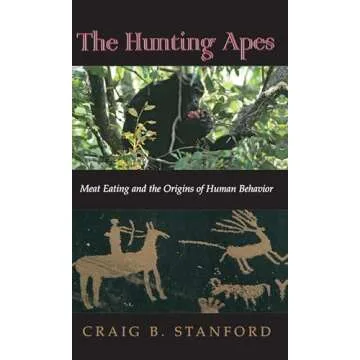
The Hunting Apes: Meat Eating and the Origins of Human
Behavior is a groundbreaking exploration into the
evolutionary journey of humans as seen through the lens of meat
consumption. Written by renowned primatologist, Dr. Craig Stanford,
this insightful book uniquely combines evidence from diverse fields
such as anthropology, biology, and sociology to provide a
comprehensive overview of how our ancestors navigated the intricate
dynamics of hunting and social structures. Stanford dives
deep...
Show more The Hunting Apes: Meat Eating and the Origins of Human Behavior is a groundbreaking exploration into the evolutionary journey of humans as seen through the lens of meat consumption. Written by renowned primatologist, Dr. Craig Stanford, this insightful book uniquely combines evidence from diverse fields such as anthropology, biology, and sociology to provide a comprehensive overview of how our ancestors navigated the intricate dynamics of hunting and social structures. Stanford dives deep into the connection between meat acquisition and the development of human society, offering compelling arguments that challenge traditional notions on human evolution.
With a focus on primate behavior, this book illustrates how hunting not only impacts survival but also influences intricate social arrangements among early humans and their primate relatives. Stanford proposes that meat played a crucial role in fostering communication skills, enabling strategic social interactions, and shaping the hierarchical structures observed in many primate societies. Through vivid examples and thorough research, he captures the essence of hunting's role in elevating female involvement in mate selection and societal organization.
Moreover, Stanford addresses the ongoing debates in the academic community regarding gender roles in primate societies with authority and expertise, emphasizing that understanding these complexities is vital for grasping our own social evolution. The book's approachable writing style makes it accessible to both scholars and general readers, allowing for a richer understanding of our past and its implications for the present.
Key Features:
- Authoritative Insights: Leverage years of research and field observations into our evolutionary history.
- Interdisciplinary Approach: Combines anthropology, biology, and social theory for a rounded perspective.
- Engaging Writing Style: Expertly balances complex ideas with an accessible narrative.
- Challenging Perspectives: Encourages readers to reassess traditional views on human evolution.
- Feminist Perspectives: Investigates the evolving roles of genders in hunting and social dynamics.
- Primate Behavior: Detailed examinations of social structures across various primate species.
Target Audience:
- Academics in anthropology and evolutionary biology.
- Students interested in human evolution and primate studies.
- General readers passionate about understanding human behavior.
- Those intrigued by the intersections of gender studies and sociology.
Occasions:
This book is perfect for occasions such as graduation gifts, scholarly readings, or personal exploration of human anthropology.
- Graduation gifts for students in social sciences.
- Book club discussions on anthropology and evolution.
- Personal reflection on human social structures and behaviors.
Comparison:
When compared to similar works in the field, such as Our Primate Family by Jane Goodall, The Hunting Apes offers a more focused analysis on meat consumption's role in societal evolution rather than solely highlighting individual behaviors of species. Stanford's expertise provides unique insights that extend beyond typical anthropological discussions, making it a compelling read for anyone wanting to delve deeper into the complexities of human history.
Emotional Appeal:
Engaging with this book provides not just knowledge but a thought-provoking journey that reconnects us with our primal roots. By shedding light on how hunting shaped not just our physical evolution but our social fabric, readers are invited to consider profound questions about the essence of humanity itself. The reflections within challenge us to appreciate the delicate balance between survival, community, and the legacy of our ancestors as we navigate contemporary issues.
Less



















 Continue with Google