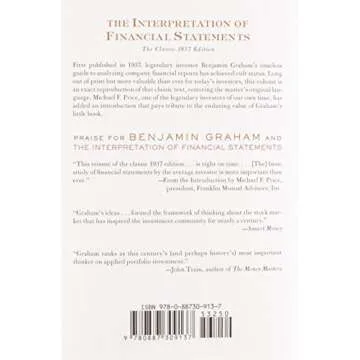
Discover a masterpiece in financial analysis with The
Interpretation of Financial Statements by Benjamin Graham,
often hailed as the father of value investing. Originally published
in 1936, this insightful book opens the door to understanding
essential accounting concepts and the financial health of
corporations through a clear examination of balance sheets. Graham
presents this knowledge in concise chapters which
not only guide readers through complex financial terms but...
Show more Discover a masterpiece in financial analysis with The Interpretation of Financial Statements by Benjamin Graham, often hailed as the father of value investing. Originally published in 1936, this insightful book opens the door to understanding essential accounting concepts and the financial health of corporations through a clear examination of balance sheets. Graham presents this knowledge in concise chapters which not only guide readers through complex financial terms but also provide historical context to the figures presented, bridging the past and present in corporate finance.
While the book addresses the foundational elements of financial statements, it does not serve as a basic primer for double-entry accounting. Readers are encouraged to have a basic understanding of financial terminology to fully absorb the content. Each chapter acts as a vital reference point for Graham's more expansive work, Security Analysis, making it an indispensable resource for anyone serious about mastering financial evaluation. Despite its age, many principles presented remain timeless and relevant in today’s markets, offering a critical lens on the valuation and selection of investments.
- Concise and Clear Presentation: Graham’s systematic breakdown of balance sheets and income statements helps demystify vital financial metrics.
- Practical Examples: Provides historical perspectives and practical applications, aiding readers in grasping real-world implications.
- Foundation of Value Investing: Exposes key investment philosophies such as the "margin of safety", ensuring that readers comprehend not just the numbers but their significance.
- Timeless Wisdom: Graham's strategies and insights are echoed by renowned investors like Warren Buffett, ensuring their relevance remains intact over decades.
- Tools for Deep Financial Understanding: An essential companion for anyone looking to deepen their grasp of fundamental analysis and corporate finance.
Target Audience
- Aspiring investors and financial analysts looking to refine their understanding of financial statements.
- Students and professionals in finance, accounting, and business fields who wish to enhance their knowledge base.
- History enthusiasts eager to explore the evolution of financial analysis through historical data.
- Individuals interested in the foundations of value investing and its application in modern markets.
This book is particularly valuable during financial literacy workshops and education programs, offering attendees a gateway to sound investment practices. It's also suitable for professionals preparing for CFA examinations or those interested in enhancing their portfolio management techniques.
Best Occasions to Use This Gift
Ideal for occasions such as:
- Graduations from finance or business programs.
- Promotions in financial roles, celebrating continued professional development.
- Holidays like Christmas, where educational gifts are appreciated.
- A unique gift for Father’s Day, especially for a dad interested in investing.
Comparison with Competitors
While many modern finance books cater to a broader audience, The Interpretation of Financial Statements holds a unique position by focusing on the importance of fundamental analysis with a historical context. Unlike many contemporary guides that prioritize strategy over understanding, Graham emphasizes a deep comprehension of financial statements, ensuring readers grasp the true _essence_ behind the numbers. Its straightforward approach makes it a classic necessity alongside more comprehensive courses in finance.
Why You Will Love This Product?
A deeper understanding of finance can empower you! As you delve into the pages of this book, you’ll uncover the foundations of investing that transcend time. Expect to build confidence in your financial decision-making skills, supported by Graham's systematic teachings on the importance of safety in capital investments. Whether you are an aspiring investor or simply curious, this book will enlighten your path toward financial literacy and savvy investing.
Less


























 Continue with Google