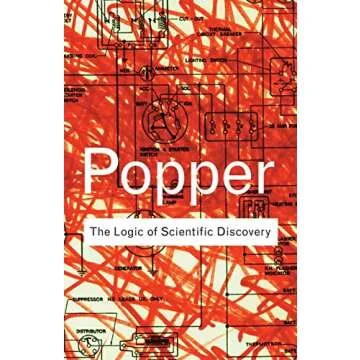
The Logic of Scientific Discovery: Embrace Scientific Inquiry
R Visit Brand Page- 64
- 0
- 100+ Sold in the past week
- 💥 300+ people added this to wishlists
- ⏳ Act fast — only a few left in stock
- ⭐️ Trusted by shoppers
The Logic of Scientific Discovery, authored by the illustrious philosopher Karl Popper, is a transformative work that reshapes our understanding of scientific methodologies. First published in 1934, this profound text stands as a manifesto for the philosophy of science, introducing the pivotal concept of falsification—the idea that a scientific theory must be rigorously testable and open to refutation. In stark contrast to the traditional focus on verification...
Show moreThe Logic of Scientific Discovery, authored by the illustrious philosopher Karl Popper, is a transformative work that reshapes our understanding of scientific methodologies. First published in 1934, this profound text stands as a manifesto for the philosophy of science, introducing the pivotal concept of falsification—the idea that a scientific theory must be rigorously testable and open to refutation. In stark contrast to the traditional focus on verification and inductivism, Popper’s approach empowers researchers to distinguish genuine science from the realms of non-science, providing a robust framework for intellectual inquiry that remains relevant today.
This volume is not just an abstract discourse; it serves as a call to arms for both scientists and philosophers. Popper encourages a systematic skepticism that drives scientific discovery, elucidating complex topics such as probability, quantum mechanics, and the logic of hypotheses. His engaging narrative captivates readers, whether they are seasoned experts or curious newcomers, guiding them through a rigorous examination of how we obtain knowledge. The meticulous quality of the physical edition, paired with the well-articulated content, makes this book a worthy companion for anyone who wishes to deepen their understanding of the scientific process.
This classic edition is crafted with high-quality paper, ensuring a delightful reading experience that invites annotation and reflection. However, caution is advised for users of the Kindle edition, which has faced formatting issues that have disappointed many readers. Prospective buyers may wish to sample the digital version prior to purchase to avoid such frustrations.
Additionally, Popper’s philosophies extend beyond academic realms; they resonate with anyone devoted to the pursuit of truth. His insistence on the necessity for theories to endure rigorous testing celebrates an ethos of critical thinking that is essential across all fields of knowledge. By engaging with Popper's ideas, you'll be equipped with a refined conceptual toolkit that fosters analytical thinking and rigorous scrutiny.
Prepare to explore the depths of scientific thought with Karl Popper’s insights, making this book an invaluable gift for philosophy aficionados, aspiring scientists, or anyone fascinated by the relentless quest for knowledge.
Less| manufacturer | Routledge |
|---|---|
| height | 7.8 |
| weight | 1.3007273458 |
| width | 1.23 |
| length | 5.08 |
| releaseDate | 2002-03-31T00:00:01Z |
| languages | [ Published Value = English ] [ Original Language Value = English ] [ Unknown Value = English ] |
| productGroup | Book |
The main theme revolves around the philosophy of science, specifically the principle of falsification as a way to distinguish scientific theories from non-scientific ones.
The author is Karl Popper, a renowned philosopher of science known for his critical rationalism.
Yes, although it deals with complex ideas, Popper's clear language makes it accessible to beginners interested in philosophy and science.
Unlike many works that focus on verification, this book emphasizes falsification as essential to scientific progress.
Yes, it is available in both print and e-book formats, though readers are advised to check the formatting quality of the e-version.
It is ideal for students, educators, philosophers, scientists, and anyone interested in understanding the foundations of scientific inquiry.