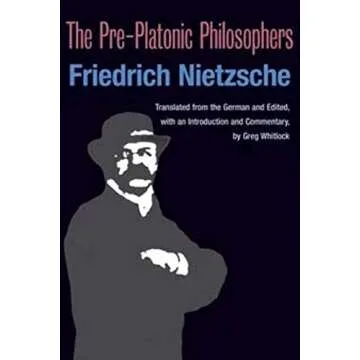
The Pre-Platonic Philosophers (International Nietzsche Studies)
offers an enlightening exploration of the thought processes
preceding Socrates and Plato, capturing the essence of early
inquiry and metaphysics. This scholarly piece delves into the rich
tapestry of pre-Platonic philosophy, highlighting figures such as
Heraclitus, Anaximander, and Pythagoras, whose ideas laid the
foundational stones for Western philosophical thought. Readers will
discover how these ancient thinkers approached the
fundamental...
Show more The Pre-Platonic Philosophers (International Nietzsche Studies) offers an enlightening exploration of the thought processes preceding Socrates and Plato, capturing the essence of early inquiry and metaphysics. This scholarly piece delves into the rich tapestry of pre-Platonic philosophy, highlighting figures such as Heraclitus, Anaximander, and Pythagoras, whose ideas laid the foundational stones for Western philosophical thought. Readers will discover how these ancient thinkers approached the fundamental questions of existence, reality, and knowledge, all while challenging the norms established by their contemporaries. Perfect for both newcomers and seasoned scholars alike, this book combines rigorous academic analysis with accessible language, making profound philosophical concepts understandable and relevant today.
Less


















 Continue with Google