




Unlocking Early Math Skills with Engaging Materials
As parents and guardians, we all want to provide our children with the best tools for learning—especially when it comes to foundational skills like math. Introducing kids to math at an early age can spark a lifelong love for numbers, patterns, and problem-solving. But how do you choose the right materials that will not only teach but also engage your little ones? This curated list of early math materials features delightful toys and activities designed specifically for children aged 3 and up, making math an enjoyable adventure.
Gone are the days when learning was confined to the classroom! With these interactive products, children can explore counting, patterning, and logic through play. This guide serves as a valuable resource for gift buyers and solution seekers, making your shopping experience easier and more enjoyable while finding the perfect items to foster your child's mathematical skills.
Creative Counting and Patterning with Bears
The Learning Resources Three Bear Family Pattern Cards is a wonderful introduction to counting and pattern recognition. Designed for homeschoolers and early learners, this game features colorful bear cards that encourage children to create sequences and patterns. While the bears are not included, the vibrant illustrations spark creativity and invite kids to engage imaginatively with math concepts. They work well as part of a hands-on learning environment, making it easy to incorporate visual and tactile experiences into everyday lessons.
This item is ideal for children who are just starting out and allows them to practice sorting and sequencing skills. By leveraging these cards, parents can create various games that involve sorting colors and sizes, making this not only educational but also a lot of fun!
Hands-On Learning with Counting Pegs
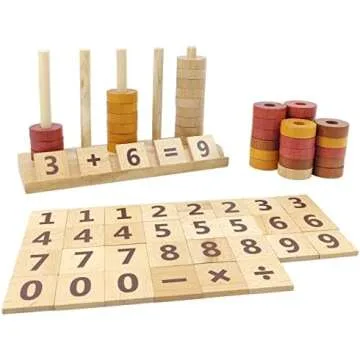
For a more interactive approach, check out the LITTLE BUD KIDS Counting Pegs. This wooden Montessori-inspired math toy includes a ten-frame game combined with addition and subtraction flash cards. Kids aged 3-7 will love the simple yet effective design! They can practice their counting skills while also reinforcing basic operations like addition and subtraction.
This educational toy stands out not only for its fun design but also for its ability to grow with your child. Parents can start with simple counting and then introduce more complex math concepts as their child's understanding deepens, allowing for endless playtime possibilities.
Engaging Math Through Play with Counting Bears
An exciting set for early math manipulatives is the edxeducation Counting Bears. This 68-piece set consists of 60 colorful bear counters, six matching bowls, and two game spinners, designed to enhance counting skills and promote home learning. Children can sort the bears by color, count them into bowls, or work together to create simple addition and comparison games with the spinners.
The versatility and tangible nature of this set captivate young learners and invite collaboration and creativity, making it a must-have for parents keen on fostering a strong foundation in math through play. Engaging children in these interactive experiences not only reinforces their math skills but also develops social interaction and teamwork.
Colorful Creativity with Bead Sequencing
Encourage creativity alongside math skills with the Melissa & Doug Bead Sequencing Set. This bundle combines an arts-and-crafts element with early math learning, allowing kids to create patterns and sequences using colorful beads. The set includes a Scratch Art Mini-Pad, further enhancing the sensory experience.
This product not only helps children recognize and create patterns but also taps into their artistic abilities. By linking creativity with math, children will likely develop a positive attitude towards both subjects, establishing a well-rounded educational foundation.
Building Shapes and Spatial Awareness
For those children who love building and creating, the Melissa & Doug Beginner Wooden Pattern Blocks is an excellent educational toy that introduces basic geometry concepts. With 30 different shapes and 5 double-sided scenes, kids can not only build their own structures but also explore color recognition, spatial relations, and fine motor skills.
These wooden pattern blocks provide an essential hands-on experience that fosters a child's understanding of shapes, symmetry, and design, all while having fun. It's a fantastic way to integrate math concepts into creative play!
Reading as a Pathway to Math
Books like Chicka Chicka 1, 2, 3 offer a delightful combination of storytelling and early math skills. The book introduces counting in a playful manner, engaging children’s imaginations and providing a narrative context to numbers.
Reading stories that incorporate counting helps to reinforce educational concepts in a fun way, making numbers relatable and memorable. This book can be a wonderful bedtime read that seamlessly weaves together literature and math.
Exploring STEAM Concepts Through Puzzles
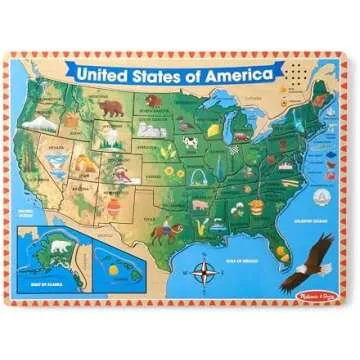
Finally, to broaden the learning experience, consider the Melissa & Doug Wooden STEAM Puzzle. This educational tool not only teaches basic math concepts but also integrates science, technology, engineering, and arts—an essential approach to modern education.
Puzzles encourage children to think critically, enhance problem-solving skills and promote hand-eye coordination and fine motor skills, and they can be a delightful way to spend family time while engaging in educational play.
Rainbow Pebbles for Sorting Fun
Lastly, the Rainbow Pebbles make for an excellent sorting and stacking tool available in early childhood education. With 36 colorful stones and 20 activity cards, children can explore sorting by color, size, and stacking, introducing them to foundational math skills while they engage in open-ended play.
The tactile nature of these pebbles promotes sensory exploration and developmental learning, making math both tangible and enjoyable. Parents can guide children through various activities while they learn to count, categorize, and develop problem-solving strategies.
Frequently Asked Questions
- What age should I start introducing math materials to my child? It's beneficial to introduce basic math concepts as early as 3 years old, using fun and engaging materials that promote hands-on learning.
- How do interactive toys help in learning math? Interactive toys encourage children to explore concepts through play, making learning more effective and enjoyable, enhancing their grasp of important skills.
- Are there books that can help my child learn math? Yes! Books like Chicka Chicka 1, 2, 3 make learning playful and relatable by incorporating numbers into fun narratives.
Each of these early math materials provides unique benefits, ensuring that children can explore numbers and patterns in various engaging ways. Incorporating these products into your child's learning experience will not only enhance their mathematical understanding but also make these lessons fun!
As you consider the best early math materials for your young learners, remember that learning should be a joyful and interactive journey. Explore your favorites now and discover the incredible benefits these engaging toys can bring to your child’s foundational learning experience!



 Continue with Google