



Giving the Gift of Math: Essential Resources for Ages 3-6
When it comes to early childhood learning, fostering a love for mathematics can set the stage for a lifetime of academic success and curiosity. For parents, educators, and gift-givers searching for thoughtful resources for children aged 3-6, this curated list of engaging learning tools provides a perfect solution. These products complement the foundational mathematical concepts that young learners will encounter, ensuring their experience is both fun and educational.
From hands-on manipulative toys to innovative educational kits, the right tools can make all the difference in a child's mathematical journey. Whether you want to introduce the basics of counting, shape recognition, or more complex concepts through play, these carefully selected materials focus on different aspects of learning, paving the way for a strong math foundation. Let’s dive into the top picks that will delight and educate your little ones!
Engage with Montessori Learning Tools
One of the most effective approaches to early math education is the Montessori method, which emphasizes hands-on learning with specifically designed educational materials. The Montessori Hanger for Color Bead Stairs is an excellent example. This interactive toy uses colorful beads to help children understand counting and sequence through a visual and tactile experience. Its bright colors make learning captivating, encouraging children to explore and manipulate the beads, aiding in both fine motor skills and mathematical concepts.
Another remarkable Montessori material is the Montessori Math Material Teen & Ten Boards. This tool promotes a deeper understanding of numbers and their relationships, allowing kids to visualize how numbers come together to form larger quantities. It’s designed for children from the age of 3, making it an ideal gift for preschoolers who are taking their first steps into the world of mathematics.
Colorful and Fun Numerical Learning
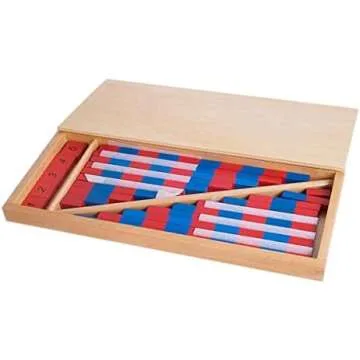
A practical and interactive way to enhance a child’s numerical understanding is through vibrant toys like the YHZAN Montessori Small Numerical Rods. These rods, paired with number tiles, allow children to physically manipulate numbers while developing essential math skills. With a variety of colors like red and blue, they not only appeal to children but also help in distinguishing between different numerical values and operations.
Similarly, the Elite Montessori Hundred Board engages children in counting and recognizing number patterns up to 100. This educational tool is more than just a board; it’s an adventure that teaches kids to understand how numbers fit into a larger context, promoting cognitive development alongside numerical literacy.
Building Basic Math Concepts through Play
The Adena Montessori Golden Beads Educational Math Toy is another fantastic resource for teaching foundational math concepts such as addition and subtraction using a hands-on approach. Children can visually see the quantities they are adding or subtracting, which helps solidify their understanding through a physical connection to the material.
Additionally, children can experiment with the Coogam Wooden Letter Number Construction Puzzle Toy Set. This set combines letters and numbers, making it versatile for learning both math and literacy skills. Kids can arrange the numbers to form simple equations, enhancing their mathematical thinking in a fun and engaging way.
Creative Counting and Sorting Fun
Creative exploration is also essential in early learning. The BOHS Montessori Bead Stair Set introduces children to basic counting with colorful beads that range from 1 to 10, making it an attractive tool for sorting and categorizing. Incorporating sorting activities into math practice not only enhances numeric skills but also sharpens critical thinking as children learn to group objects based on different attributes.
Finally, for role-play enthusiasts, the Hape Checkout Register Wooden Play Set offers wonderful pretend play experiences that subtly teach children about money and basic transactions—an essential math skill. Role-playing can excite children about numbers and practical applications of math in everyday life.
Frequently Asked Questions
- What age is appropriate for Montessori math materials?
Montessori math materials are designed for children ages 3-6, focusing on foundational skills and hands-on learning. - How do hands-on math toys aid learning?
These toys encourage active participation, helping children understand abstract concepts through physical manipulation and visualization. - Can math toys improve problem-solving skills?
Yes, engaging with mathematical toys develops critical thinking and problem-solving abilities by allowing children to explore different solutions. - Are Montessori materials suitable for home education?
Absolutely! Montessori materials are perfect for home education as they promote self-directed learning and are easily accessible for parents.
In conclusion, investing in high-quality math resources for young children can nurture a love for learning that lasts a lifetime. Each of these products aims to create a fun and engaging math experience for ages 3-6, connecting play with foundational math concepts. By selecting educational toys that are designed to inspire curiosity and promote creativity, you are making a conscious effort to support early childhood education.
Explore your favorites now, and remember that the right tools will not only enhance a child's learning but will also create joyful moments of discovery and growth. Let your little ones thrive as they embark on their mathematical adventures!



 Continue with Google