



Unlocking Language Arts Success for Your Homeschooler
For many homeschooling families, finding the best resources to enhance language arts skills can be a daunting task. Whether you're looking for fun manipulatives to keep your toddler engaged or comprehensive workbooks for older kids, these essential language arts resources are designed to support both teaching and learning. This carefully curated list not only features exciting tools but also activities that inspire creativity and make learning enjoyable for young minds.
The goal is to equip you with language arts resources that can foster a love for reading and writing in your children. Each item has been thoughtfully chosen to provide different learning experiences, ensuring that every child finds the right fit for their unique needs. In this guide, we’ll explore a variety of practical and engaging tools that enhance language skills while making the learning process delightful.
Engaging with Manipulatives
Manipulatives are a powerful way to teach young children the building blocks of language. One such tool is the hand2mind Lowercase Alphabet Chips. These colorful, tactile chips make spelling a hands-on experience. Your child can physically arrange letters to form words, helping them connect letters with sounds effectively. This active learning method is often more memorable than traditional methods and supports the learning process via play.
Another fantastic option is the Inspired Thinkers Alphabet Magnetic Letters. These foam letters not only stick to your fridge but also add a playful touch to your child’s learning space. Children can practice letter recognition and spelling while having fun creating words on a magnetic surface. Plus, they make great Easter Basket stuffers!
Creative Activities to Reinforce Learning
Incorporating creative activities into language arts can spark a child's interest in reading and writing. The Do A Dot Art! Play and Learn Creative Activity and Coloring Book is a prime example. It's not just a coloring book; it's an interactive way to learn numbers, letters, and shapes. The dot art encourages children to express themselves while conveying essential learning principles in a fun, engaging format.
Pair this with the I'm Going to Write™ Workbook: Lowercase Letters. This workbook simplifies the process by teaching children how to form letters correctly in an encouraging and structured way. Together, these resources create a well-rounded approach to boosting early literacy skills.
From Sounds to Sentences
Once your child has a foundation in letters, it’s time to dive into phonics and sentence building. The ABC See, Hear, Do Level 3: Learn to Read Blended Beginning Sounds introduces blended sounds in an engaging manner, ideal for kids taking their reading to the next level. It allows them to hear, see, and do – which is an effective method for retaining new skills.
To take your child’s skills a step further, try the Key Education 86-Piece Sentence Building Set. This set empowers kids to assemble simple sentences, building their writing skills while they play. Easy-to-handle pieces give children the confidence to experiment with language, making it a joyful learning experience.
The Importance of Phonics
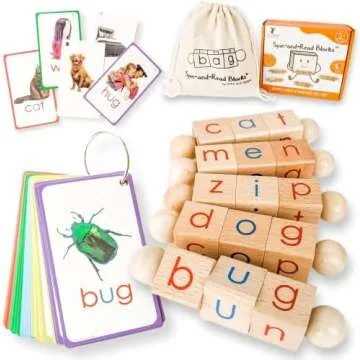
Phonics play is crucial in developing reading proficiency. The LITTLE BUD KIDS Spin-and-Read Montessori Phonetic Reading Blocks provide a fun yet effective way to practice phonics and sight words. Designed with beginner readers in mind, they include flashcards and blocks that encourage repetitive practice in a playful setting.
Additionally, the ABC See, Hear, Do Level 1 series focuses on uppercase letters, providing a strong foundation for recognizing letters. As they progress to Level 2, children naturally transition into reading and recognizing lowercase letters, paving their way toward fluent reading.
Fun with Sentence Building
Learning to write can feel daunting, but with tools like the Educational Insights Sentence Building Dominoes, it can transform into a fun game. With 114 double-sided dominoes, your child can form sentences and understand syntax visually. Engaging with this tool helps them learn how to structure sentences while maintaining their interest through play.
The mix of play and education allows for an enjoyable approach to learning, whether at home or during a homeschooling session. It's important for learners of all ages to view writing as a creative outlet rather than a chore.
FAQ About Homeschool Language Arts
What are the best tools for teaching language arts?
Some excellent tools include letter manipulatives, workbooks, and interactive games. Items like alphabet chips, magnetic letters, and sentence-building sets are invaluable for developing literacy skills.
How can I make language arts fun for my child?
Incorporating play into lessons, such as through arts and crafts or games with manipulatives like magnetic letters or dominoes, can make learning enjoyable and engaging.
What age is appropriate for starting language arts?
Early literacy can be introduced as young as 3 years old with simple tools, while structured workbooks can be excellent for ages 5 and above. Tailor resources to your child's readiness and interest.
Conclusion
This curated list of resources stands as a beacon for homeschooling families eager to enrich their child's language arts skills. Each tool and activity is crafted not only to educate but also to ignite creativity and wonder in young learners. As you explore these options, remember that boosting reading and writing skills goes beyond mere academics—it’s about fostering a love for learning that lasts a lifetime. Explore your favorites now and embark on this exciting educational journey with your child, making language arts a delightful adventure in your homeschool experience!



 Continue with Google