


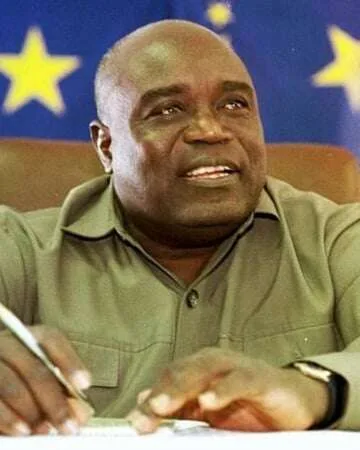
The Event of Laurent-Désiré Kabila's Assassination
On January 16, 2001, the political landscape of the Democratic Republic of the Congo (DRC) was shaken when President Laurent-Désiré Kabila was assassinated in his office. This shocking event, orchestrated by one of his own bodyguards, highlighted the underlying political turmoil and conflict within the country. Kabila, who had come to power in 1997 after overthrowing the long-standing dictator Mobutu Sese Seko, was both celebrated and vilified for his controversial rule.
At the time of his assassination, Kabila was facing significant challenges, including widespread dissent and the ongoing Second Congo War, which had embroiled multiple African nations. His leadership style was often criticized as authoritarian, leading to increased tensions within both his government and the military forces tasked with protecting him.
The Circumstances of Kabila's Death
President Kabila's death was sudden and dramatic. Reports suggest that he was shot by his bodyguard, who later claimed he had been ordered to kill the president by those loyal to a rival faction. The motive behind this betrayal remains a topic of speculation, but it illustrates the precarious nature of Kabila's regime. Following his assassination, there was a power vacuum, and fears of increased violence surged throughout the country.
The Aftermath of the Assassination
In the wake of Kabila's assassination, tensions in the DRC escalated. His son, Joseph Kabila, quickly ascended to the presidency, facing the daunting task of stabilizing the nation amidst ongoing conflict and foreign intervention. Kabila's assassination not only changed the leadership in the DRC but also marked a pivotal moment in the country’s ongoing struggle for peace and unity.
The Impact on Congolese Society
The assassination of Laurent-Désiré Kabila had far-reaching consequences for the Congolese society and politics. It unveiled the fragility of the security and political structures that Kabila had established. The power dynamics within the DRC were abruptly altered, further complicating a war-torn nation.
Laurent-Désiré Kabila's Legacy
While Kabila is remembered for his role in overthrowing Mobutu, his presidency is often marred by accusations of human rights abuses and dictatorial governance. His tenure, culminating in his assassination, raised questions about leadership and governance in post-colonial African states and influenced the trajectory of the DRC's future.
Joseph Kabila's Rise to Power
Following the assassination of Laurent-Désiré Kabila, his son Joseph Kabila took over the presidency. Joseph's leadership was marked by attempts to negotiate peace and rebuild a nation fraught with division, and he eventually sought to establish a government that could unite the various factions vying for power post-upheaval.
Fun Fact
Kabila's Interesting Fact
Before his presidency, Laurent-Désiré Kabila was a guerrilla leader during the Congo's first and second wars and was a figure of significant historical import, yet his life was ultimately cut short by an act of treachery from within his own circle.
Additional Resources
Recommended Reading on Laurent-Désiré Kabila
For those interested in deepening their understanding of this complex figure and the political landscape of the DRC, consider reading "A History of the Congo" and "The Congo: From Leopold to Kabila: A People's History".





 Continue with Google