


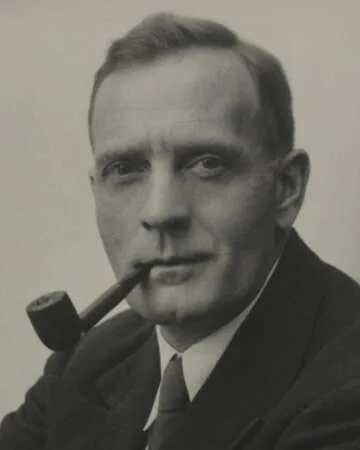
Introduction to Edwin Hubble
Who Was Edwin Hubble?
Edwin Hubble, born on November 20, 1889, in Marshfield, Missouri, was a groundbreaking American astronomer whose work fundamentally changed our understanding of the universe. He is best known for discovering galaxies beyond our own Milky Way and for establishing the foundation of modern cosmology through the concept of the red shift.
The Legacy of Edwin Hubble
Hubble's profound contributions to astronomy have earned him an immortal place in science history. His observations led to the realization that the universe is not static but expanding, a concept that opened new frontiers in astrophysics and cosmology.
Key Discoveries of Edwin Hubble
Hubble's Discovery of Galaxies
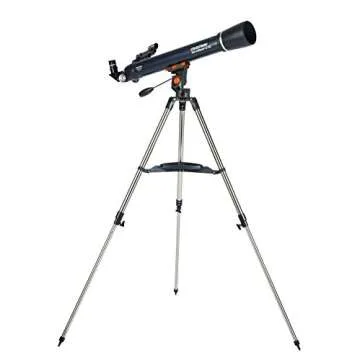
Prior to Hubble’s observations, it was commonly believed that the Milky Way was the entirety of the universe. In the 1920s, he used the Hooker Telescope at Mount Wilson Observatory in California to identify and classify a multitude of distant galaxies. This discovery not just expanded the known universe but also transformed our concept of the cosmos.
The Hubble Law and Redshift
In another monumental contribution, Hubble discovered the relationship between the distance of galaxies and their speed of recession, now known as Hubble's Law. This was established through the observation of redshift, where the light from receding galaxies shifts towards the red end of the spectrum, indicating they are moving away from us. This pivotal insight led to the understanding that the universe is expanding.
Fun Fact
Edwin Hubble's Interesting Fact
In 1924, Edwin Hubble was awarded the prestigious *Rumford Prize* for his groundbreaking astronomical discoveries, underscoring the significance of his contributions to the field of astronomy.
Additional Resources
Recommended Reading on Edwin Hubble
For those interested in delving deeper into the life and work of this legendary astronomer, consider reading "The Hubble Wars" by Eric Chaisson and "Hubble: 15 Years of Discovery" by David H. Levy. These titles explore Hubble's legacy and the impact of his discoveries.





 Continue with Google