


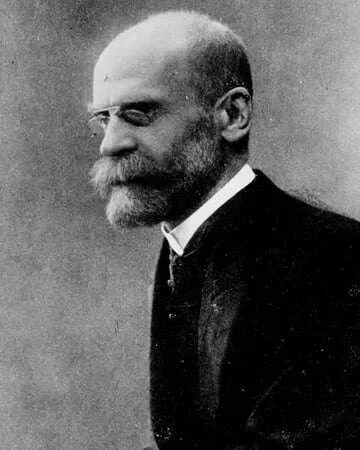
The Birth of Émile Durkheim: A Legacy in Sociology
Émile Durkheim, born in Épinal, France in 1858, is renowned as one of the founding figures of sociology. His seminal work, De la division du travail social (The Division of Labour in Society), published in 1893, laid the groundwork for modern sociological theory. Durkheim's insights into social order and the importance of collective consciousness offered a profound understanding of society’s structure and functions.
Émile Durkheim's Journey in Sociology
Durkheim's early life in a Jewish family influenced his perspective on social interactions and collective norms. He emphasized the importance of social solidarity in his work, arguing that societal cohesion is essential for maintaining order. His approach to studying social phenomena through empirical research methods set him apart from previous philosophers, making him a pivotal figure in establishing sociology as a scientific discipline.
The Impact of Durkheim's Teachings
Through his extensive research and teaching, Durkheim developed key concepts such as anomie, which describes a state of normlessness in society that can lead to social instability. His investigations into the causes of suicide revealed how social factors affect individual behavior, proving that personal issues could not be viewed in isolation from societal context. This holistic view arguably changed the landscape of social sciences.
Enduring Influence Through Time
Durkheim's ideas continue to resonate today, influencing contemporary sociological research and theory. His advocacy for the study of social facts as things laid the foundation for further development in the field of sociology, driving future scholars to explore the complex interplay between individual and society.
Key Concepts Introduced by Durkheim
Among his significant contributions, Durkheim introduced concepts such as the division of labor and the function of ethics in maintaining social order. These ideas have become essential components of sociological education and research, shaping our understanding of societal dynamics.
Durkheim's Legacy in Modern Sociology
The methods and frameworks put forth by Durkheim have encouraged generations of sociologists to explore social phenomena critically. His emphasis on empiricism and objectivity in social research remains a cornerstone of how sociology is taught and practiced today.
Fun Fact
Émile Durkheim's Interesting Fact
Did you know that Émile Durkheim established the first department of sociology in France at the University of Bordeaux in 1895? This institution helped formalize sociology as a distinct academic discipline.
Additional Resources
Recommended Reading on Émile Durkheim
For those interested in delving deeper into Durkheim's ideas, consider reading The Division of Labour in Society or Suicide, both of which outline his essential theories and research methodologies that continue to influence sociological thought.













 Continue with Google