


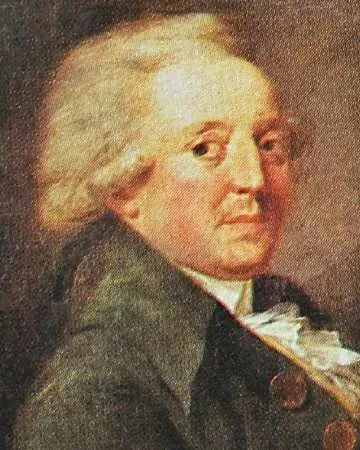
The Legacy of Marquis de Condorcet: A Pioneer of Enlightenment
Born on September 17, 1743, in Ribemont, Picardy, France, the Marquis de Condorcet emerged as a pivotal figure in the French Enlightenment. He was not merely a philosopher but an innovative mathematician and a relentless advocate for human rights, education, and the ideals of democracy. Condorcet's work transcended mere political theory, as he claimed that reason and scientific thinking could enhance human welfare and progress. His *Condorcet Method*, a collective decision-making process, reflects his belief in ranked voting and has influenced modern voting theory.
Marquis de Condorcet: A Philosopher Ahead of His Time
Condorcet's philosophical contributions are vast, particularly his deeply held convictions regarding the power of **rational thought** and **progress**. Through his work, he envisioned a society governed by reason, where education would eradicate ignorance and promote equality. This vision was encapsulated in his famous work, "Outlines of an Historical View of the Progress of the Human Mind," where he meticulously analyzed the evolution of human society and the potential for continual improvement.
Condorcet's Influence on Democracy and Voting
The *Condorcet Method*, named after him, offers a refined approach to collective decision-making, prioritizing fairness in electoral outcomes. This voting system emphasizes ranking candidates by preference rather than selecting just one, thereby allowing a democratic process that can more accurately reflect the communal will. His influence endures not only in political philosophy but also in contemporary electoral systems worldwide.
An Advocate for Equality and Human Rights
Condorcet's commitment to **human rights** and **gender equality** was revolutionary for his time. He argued for the inclusion of women in the political sphere and vehemently opposed slavery. His works advocate for universal suffrage, signaling his profound belief that all individuals deserve a voice in their governance. Condorcet envisioned a society where progress was achievable through collective human effort and rational discourse.
Condorcet's Fight Against Injustice
In a turbulent time marked by the French Revolution, Condorcet’s ideals often put him at odds with the political realities of his day. His opposition to the rising tide of tyranny and mob rule led to a tragic end—he was forced to flee, ultimately leading to his death in 1794. Despite his struggles, his intellectual legacy persists, inspiring advocates for civil rights globally.
The Enduring Relevance of Condorcet’s Ideas
Even after his death, Condorcet’s philosophies continue to resonate, particularly regarding **education**, **democracy**, and **equity**. His belief in enlightenment ideals empowers activists and thinkers today, proving that the quest for knowledge and liberty is an eternal struggle that should not be forgotten.
Fun Fact: Condorcet and Mathematics
Did You Know? Marquis de Condorcet's Contributions to Mathematics
Aside from his philosophical endeavors, Condorcet was an influential mathematician. He made significant contributions to mathematical theory, particularly in **social choice theory**, which deals with aggregating individual preferences into a collective decision, a concept that is critical in today’s democratic practices.
Additional Resources: Dive Deeper into the Mind of Condorcet
Recommended Reading on Marquis de Condorcet
For those intrigued by his life and ideas, consider reading *"The Life of the Marquis de Condorcet: A Historical Account"* by **Esprit A. B. G. T. de Laing** or exploring *"Condorcet: From the Enlightenment to the Left"* by **Barbara T. W. D. M. Fagan**. These texts provide deeper insights into the complexities of his thoughts and their impact on contemporary society.












 Continue with Google