


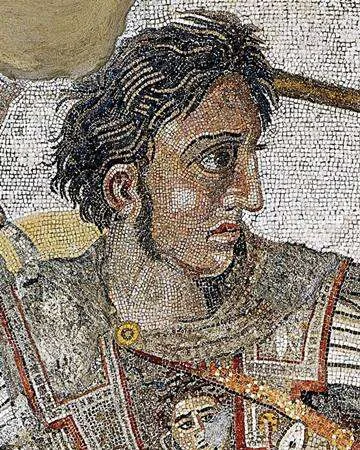
The Birth of Alexander the Great
Born in Pella, the ancient capital of Macedonia, on July 356 BC, Alexander the Great was destined for greatness from the outset. His mother, Olympias, and father, King Philip II, laid the foundations of what would become one of the most formidable empires in history. Even as a child, Alexander exhibited remarkable intelligence and a strong will, characteristics that would mold him into a formidable military leader.
A pivotal moment in his early life was his training under the influence of the great philosopher Aristotle. This education not only fostered his thirst for knowledge but also instilled in him a love for the arts and sciences, combining intellect with the ambition to conquer lands. The marriage of culture and military expertise would soon set the stage for his legendary campaigns.
Alexander the Great: Early Life and Education
Alexander was not only born into nobility but also into a world brimming with conflict and opportunity. Under the tutelage of Aristotle, he developed an insatiable curiosity about the world beyond Macedonia. This education laid the groundwork for his future aspirations of conquest. His knowledge of philosophy and science would later influence his leadership style and military strategies.
Alexander's Heritage and Influences
Being the son of Philip II, whose reign marked the rise of a powerful Macedonian state, Alexander inherited a robust legacy. His father's unification of the city-states of Greece under Macedonian hegemony inspired Alexander's own vision of building an empire that stretched far beyond the borders of his homeland.
The Legacy of Alexander the Great
Alexander's life was tragically short, as he passed away at the young age of 32 in 323 BC, yet his impact reverberates through history. His campaigns stretched from the Greece to the edges of India, creating a cultural blend that would influence generations. His relentless pursuit of glory transformed him into a legendary figure whose name is synonymous with greatness.
Alexander's Military Conquests
Despite his brief life, Alexander's military genius resulted in the creation of one of the largest empires of the ancient world by the time of his death. His tactics and strategies are still studied in military academies around the globe, showcasing the profound influence he had on both warfare and leadership.
The Cultural Impact of Alexander’s Empire
Alexander's conquests led to the spread of Greek culture across three continents, heralding the dawn of the Hellenistic Era. This cultural diffusion transformed regions and integrated diverse cultures, which fundamentally altered societal structures in the conquered territories.
Fun Fact
Alexander’s Unique Nickname
Did you know that Alexander was often called "Alexander the Great" not just for his conquests but also for his charismatic leadership and vision? His ability to inspire loyalty in his troops is legendary.
Additional Resources
Recommended Reading on Alexander the Great
For those wishing to delve deeper into the life and achievements of Alexander the Great, check out "Alexander of Macedon: 356-323 B.C. A Biography" by Peter Green and "The Campaigns of Alexander" by Arrian. These texts provide detailed insight into his life and legacy.







 Continue with Google