


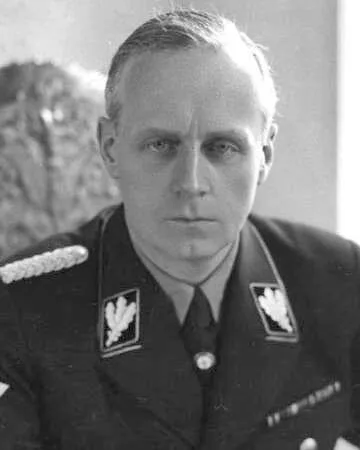
Hitler's Strategic Move: Appointing Ribbentrop in 1934
On September 30, 1934, Adolf Hitler made a significant diplomatic appointment that would impact Germany's foreign relations during a tumultuous period. He named Joachim von Ribbentrop as the ambassador for disarmament, a role that would see Ribbentrop play a central part in Germany's strategy to manipulate international disarmament efforts to the benefit of the Nazi regime. At this time, the global community was grappling with the aftermath of World War I, and the demand for disarmament was one of the pivotal issues in European politics.
This appointment was not merely a ceremonial gesture; it reflected Hitler's desire to reshape Germany's international image amidst rising tensions in Europe. Ribbentrop, known for his charisma and eloquence, was tasked with advocating for Germany in international forums while secretly advancing Hitler's militaristic ambitions. It exemplified the dichotomy of the Nazi regime's public diplomacy versus its true intentions - to rearm Germany in violation of the Treaty of Versailles.
Joachim von Ribbentrop's Role in Disarmament Negotiations
As ambassador for disarmament, Joachim von Ribbentrop was pivotal in shaping Germany's approach to the League of Nations. He represented Nazi Germany at several important disarmament conferences, where he rose to prominence through his assertive negotiation style. Despite the public advocacy for peace and disarmament, his underlying agenda was to undermine the restrictive measures imposed on Germany, while covertly strengthening its military capabilities. His role showcased the inherent contradictions in Nazi foreign policy, as he promised cooperation while plotting to ignore international agreements.
The Endurance of Ribbentrop's Influence
Ribbentrop's tenure as ambassador solidified his position within Hitler's inner circle. His expertise in diplomacy later earned him a promotion to foreign minister, where he leveraged his influence further. In this capacity, he played a significant role in negotiating key alliances, such as the Pact of Steel with Fascist Italy and the infamous Molotov-Ribbentrop Pact with the Soviet Union. His initial focus on disarmament discussions was a mere stepping stone in his larger political journey that would ultimately lead to significant ramifications during World War II.
The Broader Implications of the Appointment
The appointment of Ribbentrop as ambassador for disarmament highlights a critical juncture in pre-war diplomatic history. It was more than just about an individual; it marked a period where diplomacy was used as a tool for deception. The Nazi regime's public commitment to disarmament masked rapid military expansion and aggressive foreign policy plans. If not for the international community's naivety and failure to respond adequately, the disasters of the following decade could have been mitigated.
The Disarmament Efforts Failures
In the years following Ribbentrop's appointment, efforts for disarmament ultimately faltered as many nations grew increasingly suspicious of Germany's intentions. The speeches made by Ribbentrop often clashed with the realities of Nazi policies, demonstrating a strategic but ultimately hollow approach to international relations.
The Precursor to War
Ribbentrop's influence and role in disarmament negotiations set the stage for the Nazi's aggressive militarization, leading directly to the conditions that sparked World War II. This appointment not only encapsulated the essence of Nazi diplomacy but also foreshadowed the regime's eventual disregard for international law and cooperative agreements.
Fun Fact
Ribbentrop’s Interesting Fact
Interestingly, Joachim von Ribbentrop was known for his obsession with social status and desired to be seen as a cultured diplomat, often trying to impress his peers with his knowledge of fine wine and etiquette, a stark contrast to the violence associated with his regime.
Additional Resources
Recommended Reading on Joachim von Ribbentrop
For a deeper exploration into Ribbentrop's life and the political landscape of Nazi Germany, consider reading "Ribbentrop: The Biography" by Jürgen Thorwald and "The Third Reich: A New History" by Michael Burleigh.











 Continue with Google