


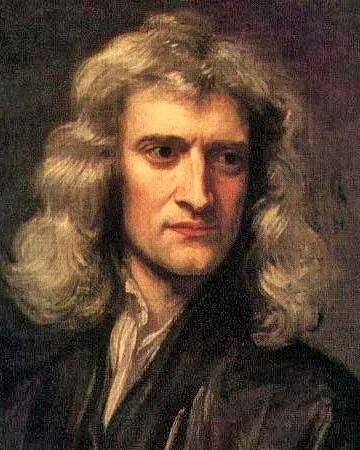

The Origin of a Famous Phrase
In the year 1676, a pivotal moment in the history of science unfolded when Sir Isaac Newton penned a letter addressed to the renowned polymath Robert Hooke. In this correspondence, Newton famously stated, "If I have seen further, it is by standing on the shoulders of Giants." This expression not only highlights Newton's humility but also reflects the collaborative nature of scientific advancement.
Newton and His Legacy
Sir Isaac Newton, born in 1643 in Woolsthorpe, England, was a mathematician, physicist, astronomer, and author. He is best known for his laws of motion and universal gravitation, which laid the foundation for classical mechanics. Through his incredible contributions, he fundamentally altered the understanding of physics and mathematics in his time and beyond.
A Reflection of Collaboration
Newton’s letter to Hooke serves as a reminder of the importance of building upon the work of predecessors. The phrase "standing on the shoulders of Giants" suggests that Newton recognized the intellect and achievements of those who came before him, including Hooke. This humility is rare among the greatest minds, making Newton’s acknowledgment of his contemporaries particularly significant.
The Engagement Between Two Great Minds
Isaac Newton and Robert Hooke had a complex relationship characterized by both collaboration and contention. Though they respected each other's intellectual prowess, they also found themselves embroiled in disputes regarding priority in scientific discoveries.
The Dynamic Between Newton and Hooke
While Newton often cited Hooke's work in relation to his own, their relationship became strained over the years. Hooke, who was known for his own groundbreaking discoveries in physics and biology, often felt overshadowed by Newton’s fame. This tension culminated in a rivalry that would mark their interactions, yet Newton's letter showcased a moment of recognition and respect.
A Call for Scientific Unity
In essence, Newton’s phrase serves as an invitation for unity among scientists. It encourages future generations of thinkers to collaborate, share knowledge, and build upon one another's work rather than insist on absolute originality. The sentiment is an essential part of the scientific process that remains relevant today.
Fun Fact
Newton's Notable Contribution
Interestingly, beyond his reflective wisdom in his letter to Hooke, Newton also developed calculus around the same time. This groundbreaking mathematical tool transformed not only physics but also the entire landscape of science.
Additional Resources
Recommended Reading on Isaac Newton
For those interested in delving deeper into the life and contributions of Isaac Newton, consider reading "The Life of Sir Isaac Newton" by Richard Westfall or "Never at Rest: A Biography of Isaac Newton" by Richard S. Westfall which provides a comprehensive look at his life and his enduring legacy in the world of science.









 Continue with Google