


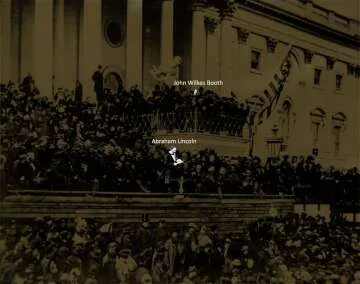
The Historic Day of Abraham Lincoln's Second Inauguration
On March 4, 1865, the nation witnessed a pivotal moment in American history as Abraham Lincoln was inaugurated for his second term as President of the United States. This event took place in the backdrop of the Civil War, a period filled with intense turmoil and a struggle that defined a generation. Lincoln, having served as a beacon of hope and unity, stood before a crowd gathered in Washington, D.C., addressing the need to heal a divided nation.
In a twist of fate, amidst the throngs of spectators was an individual who would later alter the course of history forever. John Wilkes Booth, a well-known actor and a staunch supporter of the Confederacy, was also present at the inauguration. While the day seemed to promise hope and renewal, it foreshadowed a tragic fate that would soon befall the nation’s leader.
John Wilkes Booth: The Man Behind the Curtain
Born on May 10, 1838, in Bel Air, Maryland, John Wilkes Booth was not just an actor but also a radicalized individual influenced by the Civil War. His attendance at Lincoln's second inauguration was merely a facade, as he harbored deep-seated resentment towards the President. Booth's life led him into the spotlight of fame, but behind the scenes, his mind was consumed with thoughts of rebellion against what he considered tyranny. This day, while he appeared to be a loyal citizen, was deceptively the calm before the storm.
The Inaugural Address and Its Weight
During his inaugural address, Lincoln spoke of unity and healing, famously expressing hopes for a peaceful end to the war. His call for reconciliation resonated powerfully with the audience. However, Booth, who listened intently, perceived Lincoln’s vision as a direct threat to his beliefs. This event would serve as the perfect cover for Booth, as he plotted a nefarious scheme that would shake the nation to its core just weeks later.
The Implications of the Inauguration
Lincoln’s second inauguration is remembered not only for its hope but also for the shadow it cast as Booth's mind drifted towards dark intentions. This day marked a decisive moment in American history, highlighting the ironies of fate and the unpredictable nature of human actions.
The Road to Assassination
After attending the inauguration, Booth would soon take drastic actions that would lead to the assassination of Abraham Lincoln on April 14, 1865, just days after the Civil War came to an end. This act, driven by a misguided notion of valor and loyalty to his cause, sealed his name in the annals of history, forever linked to one of the most tragic events in U.S. history.
Booth's Escape and Capture
Following the assassination, Booth’s escape sparked a massive manhunt across the nation. His actions not only changed the trajectory of American history but also underscored the depth of division still present in the country. The tragic end of Lincoln’s life left a lasting impact, serving as a stark reminder of the perils facing leaders in times of conflict.
Fun Fact
Booth’s Influences
Interestingly, John Wilkes Booth came from a family of actors. His brother, Edwin Booth, was one of the most celebrated actors of his time and was appalled by his brother's actions. This contrasting legacy highlights the complexities of familial connections even amid differing ideologies.
Additional Resources
Recommended Reading on Abraham Lincoln and John Wilkes Booth
For those interested in exploring more about this historical episode, consider reading Team of Rivals by Doris Kearns Goodwin, which offers an in-depth look at Lincoln's leadership, or American Lion by Jon Meacham, focusing on the life and times of Lincoln, including the impact of his assassination.










 Continue with Google